The Cruelty is the Point: Reviewing Finnish Licorice

I made my triumphant return to Finland last month (vaikka en vielä puhu suomea hyvin), and one of my priorities this time was to decide whether I’m cut out for eventually moving to Finland by assessing my ability to tolerate, nay enjoy, Finnish licorice. I’m not sure by what mechanism I’d ever be able to effect a move to Finland in the first place, but it’s good to have goals, right?

Anyway, like in most of the Nordics, licorice is super popular in Finland, specifically the salty variety (salmiakki in Finnish). Fun fact: the salt in Salmiakki is from ammonium chloride rather than normal table salt, and it definitely has a noticeably different taste. Sure, it’s salty AF, but it’s salty with an attitude. It’s almost as if it’s salty on an emotional as well as a sensory level. However, ammonium chloride isn’t the only game in town, and so I decided to round out my selection of two different types of salmiakki with a box of the famous “Sisu,” as well as the delicious-sounding tar-flavored licorice, “Leijona.” My pledge to myself was that I was going to finish all four boxes — not all at once, but eventually. Otherwise, I might chuck them out the minute the first salty pastille started to burn a hole in my tongue, resigned to the fact that my soft American constitution would never know the true meaning of Sisu.

First impressions:

Fazer Salmiakki Original: Jesus fuck this is salty. The saltiness is brighter, more acidic than something traditionally salty like potato chips. It’s what I imagine touching your tongue to a 9V battery would feel like. Like I mixed a bunch of table salt and lemon juice into a sludge, heated it up, and then dipped my tongue in there and held it there. Is there even licorice in this? And I’m supposed to eat this entire box?

Fazer Salmiakki Super: Oh thank fuck, it’s less salty despite being called “Super.” I was legitimately dreading it. I’m gonna spend the first ten seconds or so just enjoying the fact that my eyes aren’t bleeding (from saltiness?) right now. There’s something herbal in here too, which is actually pretty nice. While it’s not spicy, the saltiness does have a really hot feeling in the mouth, and this herbal/menthol aspect is definitely helping cool me down. Final impression: okay, despite everything I said, this is still really damn salty.

Sisu Xylitol: Overpowering. Not salty, but my mouth is being assaulted by waves of menthol that’s extremely astringent. This isn’t like a cough drop; it’s almost bitter, and I think my eyes might be watering. I’m certainly glad to be in my hotel room right now and not somewhere where a real Finn might see this. This candy has made me feel deeply ashamed.

Leijona: Well, there’s a sugar coating on these, so you get lulled into a false sense of security when the few seconds relax you with a fairly sweet, mild licorice flavor. Then the tar hits. Hot, wet tar, like taking little bites out of a freshly paved road on a hot summer day. Then menthol, just like the Sisu, only stronger. The flavor of these lasts forever… the tar starts to subside and it’s intensely bitter. I swear two minutes have gone by and this little pastille is still off-gassing intense flavors all over my mouth. It starts to subside, and I’m left in a state of profound confusion… did I actually enjoy that? I eat another one and marvel at how stunningly unpleasant it is. Afterwards, I contemplate eating a third one.

Impressions after spending a long time trying to get used to them:

Fazer Original/Super: After half a box of each type, these are worrying me, because I’m just not getting over the hump with the saltiness. Given that, as salmiakki goes, these aren’t particularly extreme (they don’t even have salt crystals crusted all over the outside), I’m not sure I’m ever going to be able to pass as an honorary Finn. (Miksi edes yritän opiskella suomea???) My one breakthrough so far is that I’m able to at least recognize that there is licorice flavor here despite the saltiness. The originals are probably my least favorite of the four — they’re nice enough at first, but as you chew on them, the licorice flavor fades out and leaves only the saltiness. As for the Super, they still have that nice menthol note on top of everything else, but the saltiness permeating all other flavors makes this something I would never eat unless it was part of a self-imposed challenge. I’ll come back and update this post if my opinion changes when I finally finish the whole box, but don’t hold your breath.

Sisu: Okay, now I’m starting to build my confidence back up, because after half a box of these, I really like them. I eat these for fun and not just as part of the challenge. Now that I’m more accustomed to the astringent/medicinal flavors, I can appreciate the licorice element, which was totally obscured at first. These are great after dinner or to clear out the aftertaste from my morning coffee. Now I have to try all the other flavors of Sisu, because there are apparently a bunch of spicy ones, as if these weren’t strong enough already.

Leijona: I’m almost finished with this box, and I’m sad I won’t be able to get more. Leijona is truly like nothing else I’ve ever eaten — I’d liken it to the way cask-strength whisky burns so good that your eyes water, and then you immediately go for another sip. Leijona has so many flavor notes that downright unappetizing (acrid, bitter, medicinal), yet it all works together to produce an unforgettable candy experience. I will say, though, that I have to be in the mood for it. Of the four initial contestants, Sisu is probably my favorite, but I have the most respect for Leijona. I ate one of these in the car with Justine and she made me spit it out because I guess my eating it made the car smell like cat urine (???). Anyway, like I said, I respect that.

In conclusion, if the Finnish government will consider my sincere fondness for Sisu and Leijona despite not liking actual salmiakki, I might have a shot. I’m headed back to Helsinki in May of next year, at which point I will replenish my backstock of Sisu and Leijona and start testing out the spicy flavors that will probably make these four look like baby food. If you have a recommendation for me, by all means leave it in the comments. I’m looking forward to putting myself through a lot of pain and nausea in order to prove my mettle as an honorary Finn.

What is happening?

Guess which dormant blog whose meager remaining traffic is entirely due to a series of posts about a churning hack that has been defunct for over a year is back with a brand new post? If you guessed, “Windbag Miles,” you are a genius! What stunning development in the world of credit cards, points, and miles could lure me out of semi-retirement? Honestly, I just feel like rambling about stuff for a while. In past times I would just head over to X.com and X a bunch of times and then privately seethe about how few likes I got on my Xs and how no one wanted to re-X me, and that would be that. But, because I refuse to contribute to the unjust enrichment of Elun Mosk – no matter how brilliantly he re-names very recognizable companies whose products have become both a noun and a verb– I have solemnly refused to X since his takeover was complete. So, here I am, back on my blog where I am unencumbered by both character limits as well as the psychic pain that comes from being a cog in the boneheaded decades-long “PICK ME” tantrum of a megalomaniacal wannabe Arthur Fortune whose greatest desire is for Joe Rogan to compliment his bench press. That’s right, I’m extremely hardcore.

Okay, with that out of the way, the reason I felt motivated to write today came out of a conversation I had with friend-of-the-blog Patrick Pibb about the state of the credit card landscape. The catalyst was the announcement by Doc o’ Credit about how Amex is moving to once-per-family rules on Delta cards, and I felt like for once in my time in this fucking hobby, a prediction I made was coming true. See, for reference, Windbag Miles in 2021:

​​One of the most frustrating things about the hobby in general is shifting goalposts. You see it in awards being devalued, where you save and save and then as soon as you’re ready to use your miles, you don’t have enough. However, another big way the goalposts shift is with updates to the way banks restrict who can earn sign-up bonuses or even open cards in the first place. This was painfully apparent a couple years ago to anyone who spent 18 months with their foot off the gas while waiting to get under 5/24 and then realized that Chase had increased the bonus restriction on the Sapphire cards from 24 to 48 months. Citi did something similar when they changed the restriction on cards to one bonus per card family, rather than per card. Citi has started to change some of those rules back, but now they’re taking a page from Chase’s book and dabbling in 48 month language. Barclay has an unofficial 6/24 policy that they started using without notice. And on and on.

So, while I’ll feel mighty stupid if the Delta Gold card has a 100k bonus next month, I’ll feel mightier smarter if Amex adopts a once-per-family rule out of the blue (something I’m convinced will happen, although I’ve been convinced of this since 2018, so maybe don’t put too much stock in my predictions).

My point in that post was that I kept getting bonuses during the pandemic even though I had no use for them, and that doing this violated one of the key tenets of the hobby: EARN AND BURN. During the pandemic, I couldn’t burn due to travel being shut down. After travel was opened back up, I still couldn’t burn due to my income taking such a hit that I couldn’t afford to travel. But, I could still earn points, and earn points I did. 

I still agree with my conclusion from a couple years ago, which is that you should earn as many points as you can, all of the time. Sure, points will only devalue over time, but what we’ve seen time and time again is that having a big stash of rapidly devaluing points is still worth vastly more than earning no points at all because by the time you had a use for the points and signed up for the card, the bank had changed the rules so you could no longer get the points in the first place. In fact, one of my counterarguments to the worthlessness of SkyMiles (no, not even after Delta’s latest fuckery will I adopt the borderline racist moniker “SkyPesos”) was that you could pretty easily rack up half a million Delta miles by speedrunning Amex’s Delta card portfolio, which is something you couldn’t do with either American or United. Now, of course, Amex is tightening the purse strings on their giant purse of SkyMiles, and as the entire SkyMiles program teeters on the brink of uselessness, I started reflecting on where we’ve been and where we are now.

I missed the golden age of churning – back when you could open up 24 Alaska cards in a year and exclusively fly Emirates first class around the world. Back when you could get millions of AA miles due to a quirk in Citi’s application process and use them to get Cathay Pacific to hook an IV of Krug n’ Kaviar straight into your veins. In fact, when I got into churning, it was right after Amex instituted a once-per-lifetime rule on sign-up bonuses, and the relevant thread announcing the move on FlyerTalk was titled “Put a Fork In It.” But for me, that was millions of miles ago, and the hobby lived on. It survived 5/24, it survived the “Great Bonvoying,” and it will probably survive whatever it is that’s happening now. In fact, the only thing I actually think would portend the end would be a crackdown on interchange fees, but since such a move would mean the immediate bankruptcy of all four major airlines, I would expect massive loopholes to be negotiated during the implementation of said crackdown. (Hopefully, right?)

I think it’s important to view the evolution of the hobby holistically, because in some ways it’s better now than ever before. How could I possibly defend something so completely fucking moronic? Well, let me at least try. Let’s all close our eyes and time warp back to the heady days of 2014, when you could still get bonuses on Amex and Chase cards once a year. Sure, these bonuses were rarely more than 50k points (if that), but redemption rates were similarly inexpensive. Aeroplan offered transatlantic business class flights for a mere 45,000 miles. I can’t remember what United’s chart was, but it had a chart, and that’s what mattered. Delta was about to abandon charts, and we felt like offering business class awards for 90,000 miles was outrageous. Yes, things were good… until you stepped on the plane. That United award got you 8-across business class seats with no storage and a decidedly un-businessy hostel vibe. Your FlyingBlue award got you a choice between 2-2-2 angle flat seats on Air France or 2-2-2 flat bed seats on KLM… IF you were lucky enough to avoid their older planes that still had worn-out recliners. Herringbone seats were still innovative, which was great for you if you wanted to fly Virgin Atlantic or Air Canada. I don’t remember what American had back then but I bet it sucked.

My point is that only focusing on the flights that you could buy at those mid 2010s bargain rates is to ignore what you were actually buying. Nowadays, sure you’ll have to pay way more for premium travel, but that travel is also way more premium. (Unless, of course, you fly Delta and wind up on one of their 767s, which have had the same butt-ass seats throughout the entire timeline I’m describing. SkyMiles are so worthless, we should name them after some sort of worthless currency, amirite?)

One of the things that makes the current moment so ripe for past reflection is that I honestly don’t know where things are going. I know American Airlines is going to nuke their redemption rates soon and I’m going to mourn the loss of the last reasonably-priced transatlantic awards. I know Delta is going to cross the million-mile award threshold soon. I know more and more seats are going to have doors even though doors are stupid. But aside from that, I’m not really sure.

My fear is that we’re actually moving backwards, and that a year or two from now, we’ll have business class products that are half as good as what we have now, coupled with award rates that are higher than ever. To wit, after almost being phased out save for a couple holdouts, herringbone seats are back with a vengeance. Everyone fucking hated these seats, but apparently the only way to have a passable business class product on a narrowbody plane is to have a herringbone seat, so here we are. American is revamping their A321T with herringbone seats, and United is following suit. JetBlue acted like the reinvented the wheel because they put in a herringbone seat but with FLANNEL, as if rubbing the fabric equivalent of Ron Swanson’s mustache for the duration of a transcontinental flight will make up for the fact that you can’t move your arms or legs due to the seat being half the width of your body.

At the same time, more and more airlines are segmenting business class, and I wonder how long it will be before that translates to saver awards (or whatever the equivalent of a saver award is in this brave new chartless world). British Airways already charges for seats in business class, and Finnair is probably going to start soon as well. How long before lounge access and checked bags aren’t included either? (Well, aside from Air Canada, who already excludes award tickets from their top-end lounge.) Or on-board meals? Honestly, business class is about the seat, so it wouldn’t be the end of the world for this to happen, although you just know that the press release announcing it would make a big deal about offering consumers more choice than ever before, and then like two days later, award prices would double so you pay more than ever to get less.

And to make matters worse, we’re in a pronounced downswing in the relative easiness of earning miles. There was a fertile period post-pandemic when Amex was absolutely making it rain with points, but those times are over and we’re stuck farming fallow ground. More and more restrictions are piling up – and the Delta Amex once-per-family rule is only the latest example. In fact, when doing some research before writing this post, I found new-to-me language on Amex’s site that suggests that they’re going to get even more restrictive about bonuses:

You also may not be eligible to receive a welcome offer based on various factors, such as your history with credit card balance transfers, your history as an American Express Card Member, the number of credit cards that you have opened and closed and other factors.

Yikes. Although, if there’s one thing I’m sure of in this crazy world, it’s that churners will continue to find a way. I do believe that the boom times will return when the card issuers’ pendulum swings from “the rewards program is too expensive” back over to “not enough people are signing up for cards.” I have no idea when that will happen, though, so in the meantime I’m just trying to capitalize on whatever offers I can find in order to keep at least some points coming in while waiting out the end of these lean times. 

Unless congress steps in and shuts it all down, in which case, “Put a Fork In It.”

Customer service is horrible and I hate it

Me: Hi there! Hope your day is going awesome! So, I placed an order for a widget two weeks ago, and I was hoping you could give me an update on when it will ship. Thanks so much for all your help!!!

Them: Hi Windbag Miles! My day is rocking and rolling, hope yours is too! Our warehouse rockstars are SUPER busy with holiday orders, so I know they totally want to get to your shipment, but they just can’t right now! I’m so sorry for this, but the absolute soonest we’ll be able to ship your order is in three weeks! Thanks so much for your support, you’re amazing!!!

Me: Oh no! That’s such a shame, since I bought the widget as a holiday present for my Mom, and I made sure to order a week before your holiday shipping deadline! Would it be possible, and I hate to even ask this, but can you please cancel my order and give me a refund? Thanks again, you’re my world and my everything!!!

Them: Aww thanks! I’m blushing because you’re such a sweetie… I really hate to tell you this (trust me, I swear that I’m just sick over it), but once the ninja rockstar superstars in our warehouse get an order in their queue, it’s impossible to cancel it!! That means that you’ll have to wait until you receive it, although at that point we’ll be so excited and happy for you to be able to return it to us! Just keep in mind that (and this is something our lawyers make us say), all returns are subject to a 40% restocking fee, a return shipping charge, and we can only process your refund in the form of a gift card that will expire in 30 days. I’m so sorry!!! But you rock and I love you dearly, so thanks again for all your support!!!!!!!!

Me: That policy is absurd. Please process my refund.

Them: Hi Windbag Miles!!! Thanks so much for your email!!! We’ve passed it along to the relevant department, and they’re going to have a pow-wow and then they will tell me if they can help get that refund over to you. Thanks again for your support!!!!

Their boss: Hey, wtf is this asshole on Twitter saying about not being able to get a refund? Send him the fucking refund, i don’t want to deal w/this piece of shit any more. Also tell him to go fuck himself.”

Them: Hey there Windbag Miles! So I have some AMAZING NEWS for you! The higher-ups took a look at your email like I promised, and they felt so bad that you had to wait so long for your refund! Like, REALLY bad!!!! So they told me to go ahead and process your refund right away, and also to give you a $20 credit to our store for your trouble. Thanks again!!

Me: OMG! Thanks so much for all your help! You’re truly like Mother Theresa and Gandhi rolled into one. You’ve made my day… and my year!! Thanks again!!!!!!

One uniquely soul-destroying aspect of our beloved late-capitalist economy is the concept of “customer service.” I hate it, and I’m speaking not only as a customer, but also as someone who occasionally provides customer service as well. It creates a funhouse mirror of human interaction where two people (assuming they’re both people) try to smile through gritted teeth and bury the actual content of the interaction under jocular nothingisms, and it benefits no one. Of course, all this forced chipperness eats away at everyone involved, which means that inevitably one or both sides will drop the act and take out their frustrations with all customer service interactions against one unlucky person.

The culprit here is an ouroboros of new-economy wisdom, where the main thing that can sink a company that primarily does business online is bad word of mouth, so they have to act like ultra-positive Christian youth group teens at all times so as to never make anyone angry. However, the companies themselves are hyper conscious of the bottom line because after years of not making any money because they spend their entire annual budget and all their revenue running ads to acquire customers, they’re always on the brink of bankruptcy despite doing millions in annual sales. So, in an effort to establish some basic loss prevention, they institute profoundly customer-unfriendly policies that are buried in legalese under customer-friendly sounding titles like “100% no-hassle money back guarantee anytime anywhere WE’RE SERIOUS just try us and see for yourself!!”

This inevitably puts the poor customer service reps in the position of not only having to defend policies that make no sense, but also to have to do it using a vernacular that, if it were ever discovered by aliens, would convince them that humans had some sort of radiation-induced brain damage. It also pisses off the customer to no end, since — get a load of this — it’s not that difficult to parse that you’re getting fucked even if it’s slathered with a healthy dollop of exclamation points and ostentatious compliments.

And of course, the final indignity for both parties is that you have to RATE THEM at the end. This is the other reason why customer service reps have to act like you’re a sultan and they’re your concubine — because if you give them a 1-star rating (even if you’re actually rating the stupid policy that someone many levels above them on the org chart created), they have a whole new headache to deal with. Not to mention that being asked to rate how much you enjoyed a company fucking you over is a ridiculous slap in the face (and the customer service person knows this and has to ask anyway).

At this point, all customer service issues can be boiled down to one of two outcomes: either the agent is empowered (or is able to get approval) to deviate from the normal policy in order to enact a completely rational resolution to the problem, or they aren’t. If they are, after some back and forth, you’ll usually get what you want, and while the outcome will satisfy you, the necessity of play-acting customer service theater for the millionth time will chip away at what’s left of your soul. If not, you’ll go back and forth in a war of attrition that you will surely lose, you’ll be angry at the company for fucking you over, AND you’ll have to deal with the shame of either having lost your temper at the poor customer service person, or smiling while you receive your beating.

(Let’s not forget the malicious tumor that has grown out of modern customer service culture, which is the person who knows how averse companies are to bad publicity and tries to hold the company and the customer service person hostage over the threat of a devastating tweet storm (or, the last resort of every Karen, a Better Business Bureau complaint). This person almost always gets what they want, because they know that for all the misguided revenue management policies that the company higher-ups put in place, companies will almost always pay someone to go away.)

This post was inspired by a great article by Nomadic Matt about the rot within AirBNB (summary: the nice façade of connecting like minded travelers with hosts who have extra space is deliberately meant to obscure the company’s true purpose: to allow shady property management companies to run untaxed and unlicensed hotels). I agree with everything he says, and I really appreciate that he hasn’t let his positive interactions with CEO Brian Chesky disconnect him from the everyday experience that non-blue check non-influencer customers will have when AirBNB fucks them over too.

I haven’t had too much bad luck with AirBNB, although I did have a host cancel reservations for my boss and I immediately before a convention. This was the first and last time I ever used AirBNB to book business accommodations (and I only did it because the location of this convention was in possibly the worst location in the entire world for hotel availability). It was a clear case of the host realizing after the fact that they had let their properties go for way too cheap with the convention in town. AirBNB did fuck-all to help me (thanks for the $20 credit, that really helps out when my fucking job is on the line and my work is reimbursing me for the rental anyway).

On the other hand, I love what AirBNB has done for travel in the Faroe Islands, since it has enabled people to stay in some absolutely amazing villages around the islands, rather than most accommodation being concentrated in the two cities. (Quick aside: the question of overtourism is relevant here, and I honestly don’t know if AirBNB is a primary driver of this. The Faroe Islands have aggressively promoted tourism in recent years, and my impression is that the most touristed spots are still mostly occupied by people on day trips from the main cities. I haven’t studied this in detail, though.) I even became Facebook friends with the guy who owns the house that Justine and I stay in in Elduvík. On balance, despite that bad experience I had, for the most part, AirBNB has been a net positive in my travel history.

That doesn’t dull the problem that AirBNB was quickly taken over by corporations who found a way to use the site against its original purpose in order to operate a business that isn’t taxed or regulated the same way that it would be if they ran that business out in the open. It happens with every gig/sharing economy company. Etsy was overrun by resellers who basically operate a AliExpress storefronts. Meal delivery companies purported to connect local restaurants with their customers but then decided that it would be more efficient for the restaurants to all be in one giant warehouse, no longer have a storefront or host customers, and be 100% dependent on delivery revenue. I’ve been using Rover to hire dog sitters for my dog, and it’s probably only a matter of time before someone sets up a network of boarding facilities and an army of poorly paid independent contractors who lurk behind sunny profile photos, goading you into letting them dump your pet in a non-air conditioned warehouse full of battery cages while you’re on vacation.

However, the text and tone of the customer service emails Matt received from AirBNB stood out to me. One shift I have noticed from a lot of bigger tech companies is that they’re dropping the faux friendliness that they initially released into the world. As these companies’ commercial models become more varied, they’re no longer dependent for survival on simple transactions like “individual customer A buys single thing from company B.” When most of your revenue comes from big property managers who are using your platform to market their shadow hotels, the individual customer’s feeling about using that platform doesn’t really matter all that much. Using AirBNB isn’t a lifestyle choice that AirBNB needs to carefully market to people (by, among other things, immediately squashing all bad press) just like Marriott doesn’t seem to mind when someone doesn’t get their preferred treatment at a Sheraton Four Points near the airport.

I first noticed this change with Amazon (who I don’t think even uses real humans for most low-level customer service interactions anymore). Their original goal was to be the World’s Most Customer-Friendly Company, whereas now they’ve dropped the customer-friendly part and just want to be the World’s Most Company. They completely reshaped consumer expectations around how e-commerce works, to the point that people expect free two day shipping on everything, regardless of whether it’s coming from an Amazon fulfillment center or an individual craftsperson selling a custom made-to-order item. They expect 24/7 customer support and threaten to report a company to the BBB if the owner/sole proprietor doesn’t respond at 2AM on Christmas.

As a result, small businesses get left holding the bag, as they always do. While the giants have moved on from performative positivity and are slowly integrating AI, canned responses, and automation into their interactions with customers, small businesses are still forced to respond in the way people have come to expect (even though everyone absolutely hates it), since now everything else is rude… and only Amazon, AirBNB, et al can afford to be rude.

It’s not so bad, though. After a few more years, the new normal of unhelpful, opaque, and sometimes even non-sensical machine responses to customer service questions will have reframed people’s expectations once again, and we can all go back to acting like normal human beings when we communicate with customer service reps. Of course, by that point, Amazon will have put most companies out of business anyway, and person-to-person customer service will be a forgotten concept just like asking the operator to connect you to someone. So, maybe it’s not so bad… in hindsight, the current horrible state of customer service will have been just a stepping stone on our path to a future where the smallest number of people can make the most money, while the rest of us tweet helplessly into the blue void hoping for deliverance. Follow me at @windbagmiles!

Windland Finbag — The worst trip I’ve ever booked

Longtime readers (do such people even exist anymore?) will know that I’ve had Finland on my mind for a while. When I was in my early 20s, I got really into these mountain bike tires that were made in Finland and were perfect for the terrain in Southern California, and I’ve missed them ever since. Also, my first cell phone was made my Nokia, so that pretty much means that Finland is my rightful homeland. (Fun fact: the bike tires were made by a company called Nokian, which was originally part of the same company as Nokia, before the tire people split off from the telecom people. Do you think the tire people feel like they got the good end of that deal?)

I’ve written in the past about various Finland-related topics, mostly focusing on Finnair and my desire to fly with them / my frustration at how difficult it is to fly with them. But, in this topsy-turvy pandemic-addled world, even the most obstinate actors have the capacity to surprise you from time to time. To wit: in the middle of the worst transatlantic business class award availability drought in at least 5 years, Finnair announces a new route between Helsinki and Seattle, and then they open up multiple business class saver seats on every. single. flight. (Note: the link is no longer useful, since most of those seats are now gone, but I feel like I should still link back to the article that alerted me to that availability in the first place.)

Now, I’ve been pretty clear in the past that traveling somewhere just because you can is indeed a perfectly fine way to pick a destination to visit. This was a little different for me, though, because I’ve been interested in checking out Helsinki for a while. I can’t exactly put my finger on why, but I just get the sense that it has an interesting vibe. (I guess will see if I’m right…) Plus, there’s that cool fortress on an island that I really want to see….

Image from UNESCO

I saw a link on Twitter to the article about how award seats were available on the SEA-HEL route at 5:03PM, and by 5:24, I had booked a round trip for myself in June. That’s by far the fastest turnaround for booking a trip that I’ve ever done, although it was certainly helped in this case by the fact that American Airlines (115k miles + $40 round trip) isn’t charging cancel fees on award tickets right now. Ultimately, it’s a pretty short trip — just five days, with only three full days to explore Helsinki. (I’m staying at the Hilton, which seems reasonably centrally located, and I still had enough Hilton points left over from past trips to book four nights there.)

It all sounds pretty good, right? A fairly low amount of miles spent for long haul business class (less than a one way “saver” award on Delta, even), a refundable fare, and a nice opportunity to visit a city I’ve wanted to see for a while. Well, almost as soon as I booked the trip, things started to sour. First of all, Finland introduced a new testing requirement, which means I’ll have to spend a couple hundred dollars on one of those stupid airport rapid covid tests in order to enter the country.

Second, I learned that Finland is letting establishments avoid capacity restrictions, as long as they verify that customers have an EU vaccine passport. Unfortunately, unlike a lot of other EU countries that have a similar requirement, Finland has no way for tourists from outside the EU to convert their vaccine certificates to an accepted format. While the CDC vaccination card will get an American into the country (for now…), once you’re there, you won’t be able to go to a bar, restaurant, museum, gym, sauna, library, zoo, or amusement park.

As soon as I read this, I figured I might as well cancel my trip, but in all honesty, I’ll probably still go. This isn’t necessarily a once in a lifetime trip (unless I catch covid while I’m there and then die from it), but it does seem like a fairly uncommon opportunity to get to Helsinki this cheaply and easily. Within a few days of me booking my trip, the majority of those award seats were gone — whether this means they were all booked, or that Finnair pulled a bunch of them because they didn’t intend to release so many saver seats is unclear. But, I’m not counting on finding availability on the west coast again any time soon, so I kind of want to take advantage of this opportunity.

Secondly, I’m not a very big museum person (insofar as I never go to museums), and I’m the opposite of a foodie. When I’m traveling by myself, the main reason I eat at restaurants is to kill time; otherwise I’m perfectly happy to eat grocery store food. And since I barely ever drink alcohol, the prohibition on bars isn’t the end of the world. So, for a trip this short, I think I can still have a pretty good time even with the vaccine card restrictions.

Finally, and this is probably the most important thing, who knows where the fuck the world will be with covid next summer. Maybe Finland will introduce a system to verify the vaccination status of non-EU tourists. Maybe there will be an omicron booster that you need to have before you can travel to the EU… or maybe the EU will completely shut its border to Americans once we hit 200 million cases… or maybe the omicron wave will subside and my trip will be nestled perfectly in the valley between omicron and the much more deadly omega variant. Maybe I’ll catch covid at the gym and die before my trip ever comes. So, might as well keep it on the books for now. Good thing there are no cancel fees!

One other thing about this trip is that it validates my strategy to not pull my foot off the gas regarding my mileage earning strategy during the pandemic, since in the last month, I’ve booked two longhaul trips without having to really think twice about whether I could spare the miles. If you include those Hilton points, I’ve spent over a million miles this year on various trips, and I have plenty more to cover future trips in 2023 and beyond. It sure is nice when your cup runneth over… now I just need to hope that I can actually take those trips, rather than the whole cycle that started when we canceled our trip to Paris in April 2020 repeating itself, thus justifying that low rumbling anxiety I have that covid trapped me in a time loop that I will never escape from.

Happy holidays!

The worst redemption I’ve ever made

Point valuations are in the news again as The Points Guy just released new methodology on how they assign useless monetary values to a variety of points/mileage currencies. This new methodology replaces their old methodology, leading to extremely actionable intel for you: for instance, did you know that American Airlines miles used to be worth 1.137293 cents per mile, but now they’re worth 1.329835 cents instead?

When I first got into points and miles, I twisted myself in knots trying to figure out how to value points, but I pretty quickly realized I didn’t care. There are all kinds of annoying dogmatic statements on this topic (things like “MILES ARE ONLY WORTH WHAT YOU’D BE WILLING TO PAY IN CASH!”) that are just as unhelpful as the arbitrary point valuations that get bandied about, and the reality is that as long as the points that you earn enable you to travel in a way that exceeds what you could afford if you earned a flat 2% back on all your spending, you’re fine.

Computing point values for specific trips can be fun as a lark, but again, there’s really no reason to do it. Points redeemers search for availability, whereas cash spenders search for the lowest prices. These often don’t align, which means that a points redeemer may redeem points for a very expensive flight that would be much cheaper if they flew out a few days earlier. Add in the ridiculous surcharges for one way trips, and you end up with points valuations like the time my Emirates first class flight from Milan to New York yielded 21 cents per point in “value.”

So, *in general* I like to get 2 cents per point from an airline mile, Hyatt point, or transferrable point. “In general” means that I’m not super paying attention to finding out the “true cash value” of a flight by looking at its average cost over a certain amount of time, or the opportunity cost of not earning 2% cash back, or annual fees, or whatever. I’ve said over and over again that the point of points for me is to point myself toward the pointy end of the plane using points that are pointedly easier to earn than the amount of cash required to reach the same point. (God I’m such a fucking amazing writer…) For the most part, when redeeming miles for business class flights, it almost always works out to more than 2 cents per mile, even when you’re spending hundreds of thousands of SkyMiles for a “saver” award. (This is another reason why I don’t really care about the true value of points, since it is almost always the case that I can afford to pay for business class flights in points but not in cash.)

Now that we’re clear on where I stand regarding the valuation of points, let me tell you about this most recent redemption in which I spent half a million points at a value of 1.2 cents per point. (Or don’t let me — if you’re as disgusted to read about this as I am to write about it, just close this page, call me an asshole on Twitter, and go on with your life.) Here’s the setup: Justine and I have been dying to go back to the Faroe Islands for our fourth trip there, and I’m starting to feel like transatlantic travel may be okay again (of course, two days after I booked this trip, Omicron made its grand entrance, so who knows).

I’d been working on this trip for a while, but I was having the supremely frustrating issue that often happens when trying to book premium travel using miles where an entire itinerary would come together except for one thing that screwed up the whole plan. Also, for the most part, transatlantic business class award availability to/from the west coast is the worst I’ve ever seen it since I got started in this game. Normally there’s at least one Star Alliance airline with a handful of flights to EU gateway cities when you need it, but the only thing that came up between April and October were mixed cabin awards on Air Canada with a 6 hour flight to Montreal in the back of a 737… and even those were slim pickings. Oneworld is better due to British Airways, but, you know, “fool surcharges.” Skyteam is the exception, with near-daily availability from SFO-LHR on Virgin Atlantic (on the A350 with the non-terrible business class seats no less), but when the final destination is Copenhagen, this means either taking an additional connection in Paris or Amsterdam en route to CPH, or booking a separate itinerary to fly LHR-CPH in one shot.

I was *really* trying to get creative here, since I’ve pretty much given up hope that SAS will ever release another saver seat on the SFO-CPH route. Back in 2017-2018, this was a pretty common route to find saver seats, but lately they’re trying to make Air New Zealand look generous. One idea was to fly to the Faroe Islands from Edinburgh rather than CPH — then we’d just need a quick flight from LHR (or maybe even a train trip instead), and we could do a couple nights in Scotland too. Or, we could fly from Paris and spend a couple nights there. The problem is that those flights are only served by Altantic Airways (cash only), and they’re on very limited days of the week*. The schedule ended up complicating things, since it was getting really hard to line up the main transatlantic flight with the right amount of time before the next leg to the Faroes without spending too much or too little time in Paris/Edinburgh.

Of course, the other issue is that those little warm-up vacations were only being considered out of necessity. We really just want to go back to the Faroes for two weeks — for various reasons, on this trip, we’re not trying to traipse around Europe beforehand like we have in the past. These sorts of disjointed itineraries are often a necessity of booking on points, since the flights you want are rarely available (hmm, do you think this means that the points are less valuable than I keep saying they are)? Now, that has worked for us in the past — we had a fantastic time in Iceland en route to the Faroes on our last trip, and that only came about because the only outbound flight with premium availability that I could find was to Reykjavik. But, for this trip, I had some trepidation about scheduling more flight legs, more hotel nights, etc. (Plus, this also means more money when you figure cabs to/from the airport, more hassle, more room for the trip to go off the rails, and — maybe most importantly right now — more opportunity to get stuck somewhere due to some covid-related shit show.)

With nothing really working out the way I’d like, I decided to do the unthinkable, and I started looking at cash fares. I intended this to be a quick check-off item on the trip booking checklist — just make sure there are no ridiculously cheap cash fares, which there almost never are, and move on. I stay away from mistake fares, and whenever there are cheap business class fares, they always get picked up by the blogz before I can get to them anyway. However, this time, I found a couple date pairs in our desired window where the round trip SFO-CPH-FAE in business class was pricing at $3000. I was a little worried it was a mistake fare, but there are plenty of date pairs for around $3500 R/T, so it didn’t seem absurdly low.

This was intriguing, since there were a number of advantages to booking the trip this way: first, of course, would be that we could fly direct to CPH, spend the night at the hotel attached to the airport, and then fly to the Faroes (FAE) on the same itinerary (since adding that leg didn’t affect the price at all). All the points itineraries I was looking at would have required us to spend somewhere between $350-$500 on two round trips on Atlantic Airways. Second, I always prepare myself for a few hundred bucks in fuel surcharges (especially since I was considering Air France), and we wouldn’t have to worry about that either. Plus, since this would be a revenue booking, we’d earn a decent amount of United miles for our trouble. Finally, this is a minor concern, but due to the turbulence on the CPH-FAE route, I prefer to sit in the front of the plane, so getting the CPH-FAE leg in SAS Plus enabled me to do that without having to spend extra for premium seating.

As for the downsides: the main one is that I didn’t have $6000 to spend on two business class flights. What I did have, however, was a shitload of points that I have earned over the past couple years of not taking my foot off the gas signing up for new cards while not traveling. And here’s where we get to the heart of the matter: was I really going to redeem hundreds of thousands of points through travel portals to buy these flights, even if it meant getting a terrible valuation per point? (Yes, duh, otherwise this post would all be a lie.)

To answer this question, I asked myself a hypothetical: let’s say there was availability on SWISS, and I could spend 85,000 Aeroplan miles flying SFO-ZRH-CPH. And let’s say that after I booked it, I got an email from Aeroplan that for 40,000 more points, I could skip the connection and upgrade to a direct flight. Knowing Justine’s strong preference to fly direct, I would almost certainly take this option. That would mean that the total mileage cost of the flight would be 125,000, which is the same cost that I ultimately ended up paying. Significantly, if I had done this and then checked the cash price for that same itinerary, it’s pretty likely that it would have been quite high, and I would be pleased with myself for getting such a high value per point.

Ultimately, what it comes down to is availability. Flights can be made available through airlines releasing award seats, or through airlines pricing those award seats cheaply enough that I have enough points to book them through travel portals by using the points as a cash equivalent. In the first case, the value per point might be very high, whereas in the second, it will be very low. But the bottom line is that in both cases, the points were able to get me on the flight.

(A quick aside: when I said I didn’t have $6000 in cash to buy these flights, what I meant was that I didn’t have $6000 in cash to buy the flights — NOT that I don’t think the flights were worth $6000. As we’ll get to in a sec, a bunch of these points are being converted to actual cash, meaning I did spend real money on the flights. In this way, the points stash ended up functioning like a travel savings account, which is fine with me. I use points to travel, that’s what they’re for, and I’m happy to do it. We could have flown economy, cashed out the same number of points, and pocketed the difference, but I didn’t want to.)

The first flight I booked was the easy one — 200k Chase points at 1.5 cents per point through the portal, and I was in and out in five minutes. Then I went over to Amex to try to do the same thing (at a 1 cent per point value, unfortunately), only to find that Amex’s travel portal didn’t have access to that flight. Platinum Travel my ass… (do you think this means that Chase points should be valued more highly than Amex points?) (As an aside, Capital One didn’t have access to that flight either, so Chase/Expedia gets the win here.)

However, and I’m sure many of you are screaming this at your screen right now, booking the flight through the Amex travel portal was the exact wrong way to do this in the first place. Instead, I used my Platinum card to buy the flight outright, earning 15,000 more points due to the Platinum’s 5x bonus on air travel. Now I just have to pay myself back for the cost of the flight using my points, and there are plenty of ways to do this, including swapping my Platinum card for a Schwab Platinum and transferring the points at 1.1 cents per point, or even partially saving my Amex balance by cashing out points I have in other programs.

The biggest downside here is that I spent (or committed to spend) my most flexible points currencies on this redemption, rather than drawing down my balances in more restrictive airline mileage currencies. I can live with that, though, since the more “sensible” option in terms of maximizing points would have cost us more money, more travel headache, and ultimately made our trip less enjoyable.

I won’t lie — laying it out like this makes the redemption seem like such a no-brainer, but it was actually a pretty big hurdle for me to get over. After all the creative “high-value” redemptions over the years, it seemed crazy to use my points [holds nose] as cash. But, in the end, the redemption lines up pretty well with what I’ve said from the beginning, which is that points are a way for Justine and I to travel more comfortably than we ever could with cash alone. It’s just that in this case, the points gave us the cash to do this, rather than giving us the miles.

There you have it: the extremely too-long story of my “worst” redemption ever.

(Epilogue: there’s another element to this discussion, since we’re talking about essentially using points as cash back — that being, “should I just start using cash back cards now?” This is a tough question, though, since cash back cards rarely offer the same type of sign-up bonuses that you can get from mileage/points cards. I also don’t manufacture spending, so I’m not missing out earning thousands of dollars a month thanks to the bonus categories on whatever cash back card the manufactured spenders like these days. (Well, I am missing out on this, but not because I’m earning points instead of cash back.) I almost always pick up cash back cards when the sign up bonus is $500 or more, although outside of those opportunities, my plan is to stick with points earning cards. Mostly this is due to the fact that I think this situation — terrible award availability coupled with unusually low business class pricing at exactly the time when we wanted to travel — is temporary, and I’m sticking to my guns that all those miles are going to be useful on their own at some point.)

*Normally, it is not a problem that a flight would be offered by Atlantic Airways. For the most part, they’re my preferred carrier to fly to the Faroes, since they have more advanced navigation (according to them), which leads to fewer canceled flights due to weather or visibility. (I’ve seen this play out in practice when we were in the Faroes during a snowstorm a few years ago and SAS canceled a bunch of flights while Atlantic operated without a hitch.) That’s a risk to the all-SAS trip we booked that I didn’t really address in the post, and it may very well be the case that Atlantic would have been worth the cash for the tickets.


It’s been a few years since I’ve written about a Morgan Stanley Amex topic, but that’s basically the only thing people know me for, so I should probably keep doing it.

I have one claim to fame in the points and miles blogging world, and it’s that I was the first one to realize that signing up for Morgan Stanley’s robo-investing platform (“Access”) makes you eligible for a Morgan Stanley Amex Platinum card. Well, I probably wasn’t the first person to realize this, but I was the first person to write about it, thus putting the whole enterprise at risk of being shut down and really fucking over the people who had quietly realized this same thing on their own but who didn’t have such a pathological need to be liked that they then went and blabbed about it on their seldom-read points and miles blogs. Oops.

Anyway, Amex is going on some kind of crazy spree right now where they’re showering anyone and everyone with tidal waves of points. Since these things tend to be cyclical, it’s pretty safe to say that we’re in the “Membership Rewards is drunk at the strip club” phase, which I can only assume will be followed by the “Membership Rewards has a bad hangover and a ton of regret” phase in which they claw back a bunch of points that they retroactively decided were gained via gaming the system. But at least for right now, the gettin’ is awfully good. So far in July, across my various cards, Amex has offered me hundreds of thousands of points through various bonuses (not all of which I can take advantage of, given how high the spending requirements for some of them are). I’ve never seen anything like it since I got into this game.

Flashback: remember in 2015 when the normally-targeted 100k Platinum offer went public for a day, but you had to apply by phone? And so many people went nuts for it that it literally crashed Amex’s phone system? I do, because I was one of the people that called 75 times that day trying to get the damn offer… and now 100k is the standard public offer PLUS some combination of statement credits and/or big spending bonuses on categories like restaurants and groceries for the first six months. All I can think is that Amex is either anticipating that a lot of people are going to dump the Platinum card now that the fee is going up, or that they promised their shiny new partner Equinox a certain number of new members and they need to recruit like crazy.

Inception style flashback-within-a-flashback: remember the time I speculated as to the reason behind why a big company did a thing that they did and people in the comments were like, “What the fuck do you know, you stupid asshole?” I love the internet…

So what does this all have to do with Morgan Stanley? Well, you may remember that, in addition to the Platinum card, there’s also a no-fee co-branded card that earns “full” Membership Rewards points and also can be used to move points to a Morgan Stanley investment account (at a penny per point). I wrote a primer on the Invest With Rewards program a couple years ago that you may want to review if you aren’t familiar, although you probably get the gist.

In the past, this program hasn’t been very popular, given the much more lucrative Schwab equivalent that lets you cash out for 1.25 cents per point. However, perhaps chafing at the liability that gazillions of newly issued Membership Rewards points represents on their books, Amex isn’t really dying to cash them out at such a good rate to your Schwab account anymore, so they’re dropping the rate to 1.1 cents per point. Still better than Morgan Stanley, but not by as much.

More importantly, the no-fee Schwab Amex card earns cash back directly into a Schwab account — not points. That means that if you want to get straight cash for your Membership Rewards balance without paying an annual fee, the Morgan Stanley card is your only option. In addition, the math for why Schwab is still the better option is getting worse and worse — justifying the 1.25 cpp cashout ratio against a $550 annual fee was one thing… 1.1 cpp against $695 is tougher.

Oh but the new credits? Well, here’s what I’ll concede: If you’re an Equinox gym-exercising, baggage-checking, Peacock-watching, Failing New York Times-reading, Audible-listening, Uber-riding, Saks Fifth Avenue-shopping, Centurion lounge-hopping young professional, then you can disregard this post. Likewise, if you’ve already determined that you want to keep a Platinum card indefinitely and you don’t need a free authorized user (which you get with the Morgan Stanley version), the extra 10% in cashout value with Schwab makes sense. For everyone else, it might actually be time to consider giving over one of your Amex slots to the Morgan Stanley card. (I should also mention that I just assume that everyone reading this has gotten the bonus for all extant Platinum card flavors by this point — if not, then that changes the math considerably.)

Especially considering that you’d actually get a $100 sign-up bonus on the Morgan Stanley card (10,000 points, which I’m assuming you’re going to cash out, since that’s the point of this thought experiment), you need to come up with $800 in justification to keep the Schwab card as your Membership Rewards cash value backstop. With any Platinum card becoming harder and harder to justify as the fee balloons, it may actually make more sense to whittle an Amex portfolio down to a solid everyday earner (either Everyday Preferred or Blue Business Plus), a premium situational earner (like the Gold or Green card), and the Morgan Stanley card as a cash backstop.

But why am I talking about keeping a backstop in the first place? This brings us back to the inevitable clawback phase that I’m sure is right around the corner. Amex is getting more creative about limiting peoples’ accounts, and apparently there’s a brand new cruel-and-unusual version of Amex jail where you can visit your points and see them all standing at attention in your account like hundreds of thousands of little Rory Calhouns, but you can’t actually transfer them to any travel partners. Now, perhaps it’s likely that accounts subject to such a restriction would also not be able to use Invest with Rewards, although my point is that it’s good practice to have as many potential options for your Membership Rewards points as possible.

I suppose I should include a quick disclosure that I’m not personally going to do this, but that’s only because I don’t have a Morgan Stanley account anymore, and I don’t want to tie up $5000 in an Access account right now. However, it’s definitely on my radar, especially as my Membership Rewards balance grows thanks to Amex’s July of pure debauchery. Let the good times roll — may they never end!

They’re definitely gonna end.

Me: “Stop being such a diva, just suck it up and fly economy.” — Also me: “No.”

Well, we knew it would happen sooner or later — I’m finally getting on a plane again. After 16 months or so, I’m heading back to Chicago next month to see my family for the first time since the pandy started, and I’m pretty excited about the trip. Unlike your garden variety #AvGeek, however, I’m not particularly excited about the flight. I’ve written in the past about my fear of flying (which is specifically more of a fear of turbulence causing me to have a massive panic attack), and one of the key ways that I manage that fear is by actually flying. A big part of my particular issues with flying involve anticipatory anxiety, and having a recent example of a flight that was perfectly fine really helps tamp that down for the next flight.

For years, I’ve tried to take a flight every couple months, even if it was just a short hop up to Seattle or down to LA (sometimes even just for the day). My last flight was coming back from Seattle after a work trip in mid February of 2020, and I was considering it as preparation for a trip to France in April that never actually happened. That’s 16 long months for my flying anxiety to fester and grow, and now that there’s a physical flight for it to glom on to, the inside of my brain has been pretty turbulent lately (LOL).

Because so much of my issues on the plane are exacerbated by claustrophobia, it makes a huge HUGE difference to fly in first class. It makes such a difference that I pretty much won’t fly in economy anymore — even if I’m traveling for work, I’ll pay the difference to upgrade to first (and god help me if I ever start working for a company with a stricter travel policy). Of course, sometimes it’s unavoidable — like flying around Europe, for instance. So, I know that I can do it, but I certainly don’t like to, and those flights are always more difficult for me.

What a diva, right? “Sir Jordan will only consent to travel in the firste classe cabine, and his champagne must be delivered in a proper glass flute and served at a perfect 39.4 degrees.” It honestly makes me feel a little ridiculous, but hey — I like what I like. (More accurately, I hate what I hate, and I really hate flying in economy.) However, this trip to Chicago is really stretching the limits of how far I’ll go to avoid an economy seat.

See, I’m really having a tough time with this upcoming trip, so I started focusing on finding something I could get excited about. A first class recliner seat with a couple extra inches of width and legroom on an Amercian 737 isn’t really cutting it in that department. Sure, those couple inches do make a pretty huge difference, but it’s still mostly a snooze. Plus, I was trying to use miles to fly on a specific day (luckily I have a shitload of those saved up), so I was never going to be able to be that choosy about my flight.

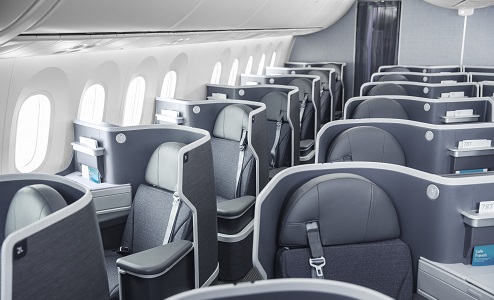
While there wasn’t much going out of San Francisco, I did find a flight from LA to Chicago on an American 787-9 with award availability. I’ve flown the 787-8 configuration before, and while it was a real treat for a domestic flight, I don’t know that I’d love it for a 10+ hour flight. The 789 has a better seat — in fact, it’s probably my favorite business class seat looks-wise. And, while tons of airlines use this same basic seat (with various customizations), I’ve never actually flown it before (unless you count British Airways’ 787 first class, which is a heavily modified version).

Photo courtesy of American Airlines, provided with extreme courtesy and courteousness.

Now, the one problem with this flight is that I don’t live in LA, and American wasn’t giving me a good routing from SFO to Chicago via LAX. That meant that I would need to make a separate booking for the SFO-LAX leg, which introduced all kinds of other issues. JetBlue had a flight, but it was at 8:30 AM, and I hate waking up early. (DIVA!) Delta had some flights, but they were expensive. It finally occurred to me to check Oakland instead, and both Delta and Southwest had some reasonable options. I ended up picking Delta, for the sole reason that the flight is on an E175, and I really like the single first class seat on the left side in those planes. It was a $200 flight that would have cost 27,500 SkyMiles, so instead I used the “pay with miles” feature for the first time and burned 20,000 miles off the top of my Delta balance. Not a great redemption, but I have a decent amount of SkyMiles right now, and I’d rather spend them than watch them devalue.

The end result, of course, is that whereas I could have acted like a normal person and taken a very simple 3 1/2 hour flight from SFO to Chicago for a fraction of the cost, I decided to spend 45,000 miles on a one-way flight to Chicago with an unnecessary connection and a 3 hour layover in LAX for no reason except that I wanted to fly on a widebody. (Let’s not forget that it’s not too far in the past that 45,000 miles was enough to fly you from San Francisco to Frankfurt in business class through Aeroplan (RIP)).

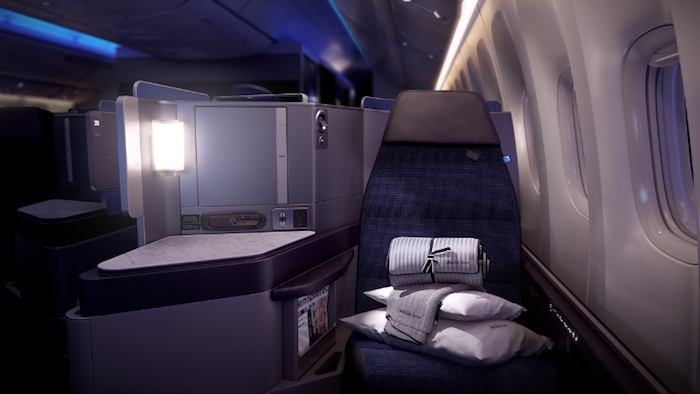
One of the benefits of my strategy to accrue as many miles as possible in as many programs as possible is that I can make a horrifying redemption such as this one and not really miss the points. And it seems to have worked, since I am actually more excited than nervous about this flight from LA. Oh, and on the return leg, I have a United 777 with Polaris seats to look forward to — and that one’s a direct flight. It’s been four years since I’ve enjoyed a Polaris cabin, so I’m excited about that as well.

A real glam shot of a Polaris seat. Courteously, United was courteous enough to offer me this photo courtesy of United.

So I’m all set for my first trip in over a year… Now I just need to hope they don’t hit me with an aircraft change.

Springtime for American Airlines (Flashback Post)

Note: This post was originally published in March of 2020 on my now-defunct newsletter, “Windbag Mails.” (Although I’m not sure if it was ever not defunct, since I only ever wrote all of four posts.) American is in the news again now that they’re abandoning award charts and setting the stage for endless devaluations, which shows how much they really want to win the race to the bottom of the loyalty program game. As we’ve seen time and time again, United and American copy Delta, not realizing that Delta gets away with shit the other two can’t, because it’s genuinely a more pleasant way to fly.

Although, I don’t know how true this is anymore. The consensus has always been that Delta gets leeway on stuff like this because its planes are nicer, its flight attendants are nicer, its lounges are nicer, Ed Bastian’s hair pomade that holds his mane in its perfect Dirty Rotten Scoundrels coif is nicer, etc. But the funny thing is that United and American haven’t gone anywhere, despite devaluing the shit out of their loyalty programs à la Delta, but then refusing to revalue their product to balance it out. One thing the pandemic showed us — and which disproves my argument below about American going down the tubes — is that there’s no such thing as a major airline going down the tubes anymore. They’ve gotten, how do you say, “too large to not succeed” and thus can always count on some sort of bailout or rescue plan to keep them chugging along. I think it’s still true that American has no corporate identity, that they don’t have a compelling customer proposition, and that the only thing consistent about them is how much they waffle between wanting to seem like a premium carrier one week and a ULCC the next. None of that changes the fact that American is always going to be a part of the landscape, as will United. There is no success or failure for them anymore, they just are. And with that, I’ll leave you with my now-disproven post from 15 months ago, since even though it may be wrong, it’s still one of my favorite things I’ve ever written.

One of the very first posts I ever wrote was a screed about how much I hate American Airlines, AKA “The Airline Americans Love to Hate.” It was about how shitty their old interiors were, and I said something like “Thank god someone was there in a back alley to witness and old couch fuck the easy chair your grandpa farted in 1000 times before he died so they could get the idea for those seats.” Hey, I had a voice from the very beginning, and I stuck to it!

American really has become the most hate-able airline in America, which is a feat when you think about it. United has that whole “we physically assault our customers” stigma, Delta devalues their loyalty program with the enthusiasm and vigor of a college freshman doing beer bongs, and Spirit stretches a thin membrane of fabric over a jagged metal frame and calls it a “seat.” Yet people flock to Spirit for their rock bottom fares knowing their fair bottoms will be rocked, Delta gets people where they’re going on time so they get a pass for their worthless miles, and Oscar Munoz secretes just enough good will from his dimpled lil cheeks that people forgive the occasional brutal passenger beating.

That leaves American, who seems to think that the existence of high travel demand and hub dominance in some key cities is enough to excuse everything from mileage devaluations to rude flight attendants to Spirit-quality seats, to planes without wifi, to a comprehensive program to remove amenities from planes. Their lack of identity is draped all over their planes in the form of a wan, listless livery that insists “you can’t insult what you don’t notice.”

Funnily enough, I actually fly American fairly often, because they usually have the best fares in first class between San Francisco and Chicago. I hate everything they stand for, but their first class is fine enough that it’s not worth an extra $50-100 to get more legroom and flight attendants who aren’t fantasizing about poisoning their passengers. (I should ease up on flight attendants, honestly, because it seems like a miserable job as it is, and working for a company like American probably compounds that fact. Plus, I’ve had some very nice, enthusiastic FAs on American, it’s just rare compared to Delta/Alaska (and even Untied, to be honest).)

So my relationship with American is a mixed bag, since I won’t go out of my way not to fly with them, but I hate them with my entire soul. At least a little bit. However, I have to hand it to them so far in 2020 for putting together one of the most mind-bogglingly idiotic business plans I have ever witnessed. The sheer audacity of it all is worthy of awe, if not respect.

First, they decided that they had too many outstanding miles. Per their financial statements, they account for miles earned for flying separately from miles sold to banks — all miles represent a liability on American’s books, but around 2/3 of the sale price of sold miles immediately goes to marketing revenue. A very nice cost-free way to eliminate the liabilities while keeping the revenue would be to cancel the miles. So they did.

Blake from corporate security decided that anyone who had used a Citibank credit card offer mailer addressed to someone else had violated American’s terms, and he shut their accounts down permanently, with no recourse. Some of the mailer abuse was definitely sketchy — like people who bought 25 mailers online and then used them to rack up sign-up bonuses. Others were more innocent, like using a mailer sent to one’s spouse, with no language anywhere indicating that the offer was non-transferrable. The genius behind Blake’s plan, though, was to cancel not just the miles earned in this arguably fraudulent manner, but all miles earned, including from credit card spending, flying, buying miles, etc. It’s a blanket get-out-of-debt free card that uses a technicality to invalidate miles earned 10 years ago, and since it’s initiated by the airline and not by Citibank, it’s not governed by any financial regulations. Citi can just claim that earning miles from credit card spend requires that you abide by the terms of the loyalty program, and you’re back where you started, in supplication at the altar of Blake.

*For anyone who isn’t aware, there actually is a guy named Blake who’s been sending out letters and emails notifying people that their accounts have been shut down.

The crazy thing is that in American’s zeal to wipe millions in mileage-related liabilities off their books, they shut down accounts of their most loyal customers — multi-year Executive Platinums, people with lifetime status, million milers. Hell, Blake probably wishes he could go back and shut down Pudding Guy, since clearly that was not in the spirit of the Healthy Choice pudding promotion.

As an aside, this situation demonstrates what’s so difficult about the milage-earning hobby these days, which is that things that are not in the spirit of a program but are technically legal are being deemed illegal after the fact, with no notification or recourse. The overly broad terms that you have to agree to end up giving these programs a ton of leeway to ban you, and companies like American and Amex are finally starting to use it. It’s at the point now where anything you do in a gray area has to be understood as a potentially fatal risk in terms of your future participation in that program. That whole Morgan Stanley dealio that I wrote about a couple years ago seemed great at the time, but who knows if a wave of new accounts in 2020 would trigger Amex’s resident Blake to take a closer look, realize that the Access account wasn’t supposed to be a gateway to the Morgan Stanley Platinum card, and then shut down everyone’s Membership Rewards account. Blake is omnipresent. Blake is your subconscious.

The top dawgs at American probably didn’t think much of firing a few thousand of their most loyal customers either, because demand for travel is on an infinite upward trend, and nothing could ever stop that… so they’d just get some new most loyal customers and keep shuttling around the DFW-based prisoners who form the lifeblood of their customer base, and everything would be fine. Right?

The accumulated filth of all their shutdowns and devaluations will foam up about their waists and all the Blakes and Doug Parkers will look up and shout “Save us!”… and I’ll look down, and whisper “LOL.”

Clearly no one at American thought that the industry was about to go through the type of generational shockwave not seen since 9/11, so their “Two steps forward, directly on our customers genitals” attitude probably seemed fine. But the fact that Blake was going on his rampage while COVID-19 was percolating in China is an especially good illustration of the risks of treating customer loyalty as an extremely exhaustible resource.

Delta just instituted an incredibly forgiving change fee waiver policy that I’m sure is going to cost them a fortune. However, Delta understands that this is an opportunity to invest in long term customer loyalty, and presumably the hive mind there has run the numbers and expects that loyalty to pay off once we’re clear of this trifling little pandemic and people want to fly on planes again. There’s an obvious counterargument to be made, which is that when demand for travel is high, most customers don’t give a shit about what airline they fly. American probably figures those people will forgive and forget, and they don’t need to worry about cultivating loyalty for the fat times when they’re suffering through the worst of the lean times. Or maybe they just can’t afford it. Blake is hubris. Blake is your righteous vindication.

Ultimately, the one-two punch of mass layoffs of an airline’s most loyal customers combined with an external event siphoning off everyone else probably just comes down to a debt-mired airline whose stock was already in the toilet trying to figure out what to do and just getting profoundly unlucky. However, no one has yet floated the alternative scenario, which is that American’s upper management is pulling a Producers, and they shorted the stock before all this started happening. They stopped #GoingForGreat a while ago, and then they started #GoingForGround, with a nice assist from a global health catastrophe.

Blake is laid off.

Maybe it was a bad idea to get all those sign-up bonuses I didn’t need, unless it wasn’t.

Wowie zowie that was some pandemic, wasn’t it? I don’t know about you folks, but the last fourteen months for me sucked pretty bad, and I didn’t even have to deal with anyone close to me dying. No, just the psychic toll of living through what amounted to a nationwide slow motion car crash stuck in a vehicle commanded by people who were looking into each others’ eyes and belting out “WELL I’M PROUD TO BE AN AMERICAN, CUZ AT LEAST I KNOW I’M FREEeeEEEEEeeE” rather than looking at the road.

Planning hypothetical trips and then figuring out how to arrange earning the points and miles necessary to take said trips had always been one of my main hobbies, but suddenly that “hypothetical” was stretched to the point of utter absurdity, and for a few weeks it felt like my life was pretty damn absurd as well. (Thankfully I had my dual hobbies of board gaming and working out in my living room to keep me sane, but that’s for another post. This is a blog about points and miles and I *only* talk about points and miles here, remember?) Anyway, after a seismic shock to my income early on in the pandemic, I switched up my credit card strategy to focus on cash back, and especially to focus on cash sign-up bonuses. Luckily Bank of America was there to answer the call, tossing me around $2000 in “free money” between two Premier Rewards cards, a Business Rewards card, and a bank account opening bonus. Thanks for the extra stimulus, guys.

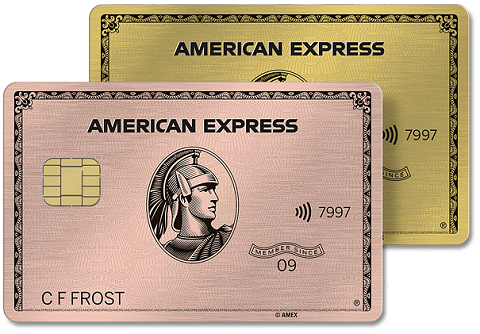
Since this is ostensibly a post about credit cards, here’s a picture of some credit cards.

Of course, once things started to stabilize again, I got back to my normal business of earning as many points and miles as I could. I officially adopted the motto of my personal hero Connor 4 Real (“Never Stop Never Stopping”) and got back to earning points wherever and however I could. As they’re wont to do, Amex made my job a little easier, tossing me some pretty huge retention bonuses on a couple of my cards (25,000 points to keep an Amex Gold that I was planning to keep anyway and 35,000 on a Delta Platinum that I was planning to dump but got roped back in by the big bonus. Some may say it was dumb to essentially pay $195 for 35,000 Delta miles, although I would disagree — as long as they keep the “pay with miles” option, that sign-up bonus was at a minimum a $350 gift card for $195, which is a good deal. Plus, it may end up being worth more than that, although potentially not given how enthusiastically they’ve been devaluing award redemptions. But more on that in a sec.)

Amex came through in other ways, such as with 30,000 point referral bonuses, or upgrade offers on basic cards. My wife took a 25,000 point upgrade offer on her Amex Everyday, which was nice since she’s currently in Amex Jail and can’t earn any sign-up bonuses. Oh, and I got 10,000 points for enrolling in pay-over-time, which brought my lifetime total of Pay Over Time bonuses to around 100k. (As an aside, is there an easier way to earn 10,000 points than enrolling in Pay Over Time? I love it so much.)

I also kept hitting up Bank of America for more and more goodies — they used to auto-reject me for new cards, but once I enrolled in their relationship rewards program by moving my IRA to Merril Lynch, they’ve gotten a whole lot more permissive. I don’t know what the official “rule” is with BofA these days, but I have opened four cards with them in the last year, which seems downright Amexian. Specifically, in addition to my Premier Rewards and Business Rewards card, I got a Flying Blue card when they bumped the sign-up bonus up to 50,000 points, plus an Alaska Business card with a 40,000 point sign up bonus (but — notably — no bonus restriction based on having had the card in the past). I was even honest on my application and said my business income for 2020 was $750, and they still approved me.

Then, I rounded out the year with two Citi Premiers, a Delta Gold business card with an elevated sign-up bonus, and finally spiced things up with a BBVA card that had a $1000 cash sign-up bonus and waived first-year annual fee. 2021 started off pretty well too, with me finally being targeted for a 30,000 sign-up bonus on the Amex Blue Business Plus, which is a card I’ve wanted to get for years.

Now, however, as we emerge from the pandemic, there’s a dual trend that makes my strategy of earning points without any immediate way to use them potentially seem pretty dumb. First, banks are eager to get new customers who are suddenly in a spending mood again, so there are some downright nutty sign-up bonuses going around. The Chase Sapphire 100k bonus comes to mind, but there are other less-publicized ones as well. I’m seeing 50k now on the Blue Business Plus (although for a higher spend requirement), and even the Flying Blue card is now offering a statement credit along with the 50k.

In parallel, as everyone predicted, airline loyalty programs are engorged with debt via outstanding miles, and they’re devaluing like a wheat thresher in, err…, wheat threshing season? They’re cutting award value to the bone, is what I’m saying. It’s not unusual to see 500,000 point awards on Delta, and American just announced they’re getting rid of charts altogether. In the past, I’ve always said that — especially in Delta’s case — the ever-increasing sign-up bonuses on airline co-brand cards soften the blow of the frequent devaluations, but Amex cards are once-per-lifetime, meaning that future increased bonuses on the Gold and Platinum Delta cards aren’t going to help me at all.

Where does that leave me? Justine got a Chase Sapphire card in 2019 even though we had no need for 60k Chase points at that time, because she was finally under 5/24 again. Now, that 100k bonus is nothing but an evil temptress, teasing us from behind a veil that has a repeating “5/24” print on it like the Louis Vuitton logo. We both got Citi Premier cards in 2020, so are we going to feel stupid when Citi launches 75k or 100k bonuses on those cards later this year? (I’m speculating here — don’t frantically start searching for these bonuses in the wild.) We’re probably less than a year away from 125,000 mile offers on the Delta Platinum card and 100,000 on the Gold card. I could have even been $50 richer if I had held off on the Flying Blue card for 10 months.

On the one hand, I deserve to be chastised for not adhering to the foundational gospel of the points and miles hobby, which of course is “EARN AND BURN.” If you don’t burn, your miles are gradually worth less and less, and due to ever-stricter sign-up restrictions, you’re locked out from higher bonuses down the road. But, there’s an other hand, too. You may not have heard from this blog in a while, but I assure you it’s not because I only have one hand. Oh no, dear reader, I’m two-handed and I’m never going to sway from my mission of always giving you BOTH hands.

One of the most frustrating things about the hobby in general is shifting goalposts. You see it in awards being devalued, where you save and save and then as soon as you’re ready to use your miles, you don’t have enough. However, another big way the goalposts shift is with updates to the way banks restrict who can earn sign-up bonuses or even open cards in the first place. This was painfully apparent a couple years ago to anyone who spent 18 months with their foot off the gas while waiting get under 5/24 and then realized that Chase had increased the bonus restriction on the Sapphire cards from 24 to 48 months. Citi did something similar when they changed the restriction on cards to one bonus per card family, rather than per card. Citi has started to change some of those rules back, but now they’re taking a page from Chase’s book and dabbling in 48 month language. Barclay has an unofficial 6/24 policy that they started using without notice. And on and on.

So, while I’ll feel mighty stupid if the Delta Gold card has a 100k bonus next month, I’ll feel mightier smarter if Amex adopts a once-per-family rule out of the blue (something I’m convinced will happen, although I’ve been convinced of this since 2018, so maybe don’t put too much stock in my predictions). I’m not saying Earn and Burn is wrong — clearly hoarding miles is not ideal, and I’d love to be burning through my stash rather than staying at home because I don’t have enough saved up for a trip right now anyway, even if the rest of the world were open. But, I will always defend an aggressive earning strategy, even if you don’t have the ability to use your miles right away. On the one hand, it gives you a lot of flexibility when the opportunity to travel does come up, rather than putting you on a treadmill where you need to earn a bunch of miles quickly in order to afford your trip. But on the other hand (see there’s that second hand again, I told you it wasn’t going anywhere!!), it also ensures that you will actually be able to earn those miles and open those cards, which is something that’s definitely not guaranteed in the long term.

Now if I could just figure out a way to burn through these FlyingBlue miles…

Spare a Thought for the Billions of Points That Will Never Exist

As world spending growth slows, the never-earned are the ultimate forgotten ones. 

A couple decides to open one credit card instead of two, or none instead of one. This happens all over the world. Billions of sign-up bonuses are never earned. How real is the loss of a sign-up bonus that never began? Is there a right to exist? Is there an ideal size of an Award Wallet total balance?

These related questions become more pressing as spending growth slows. China’s spending is on track to peak before 2025. Spending growth in the U.S. this year is likely to be the lowest in history except for one year, 1918. 

The late University of Oxford points blogger Derek Parfit wrestled with the question of the world’s ideal points balance in an influential 1984 book, Reasons and PNC Bank. He didn’t delve into the carrying capacity of Amex’s balance sheet, and he stayed away from the issue of clawbacks, which occur after redemption and thus raise a different set of concerns.

In an abstract, theoretical way, the British blogger presented what he called the “Repugnant Conclusion.” Here’s how he stated it: “For any possible balance of at least 10 billion points, all with a very high quality of transfer partners, there must be some much larger imaginable balance whose existence, if other things are equal, would be better, even though its points have partners that are barely worth transferring to.”

Parfit’s utilitarian logic was that if each point in the balance is happier transferred than expired—even if just barely—then the total amount of usability in an extremely large balance, let’s say hundreds of billions, would be greater than the total usability of a smaller balance whose average usability is greater. It’s simple arithmetic. But it’s also kind of awful, which is why Parfit called it repugnant (i.e., extremely distasteful; unacceptable).

One way to escape the Repugnant Conclusion is to maximize average usability instead of total usability. But that turns out to lead to a different kind of awfulness, as explained in an entry in the TPG Encyclopedia of Philosophy by Gustaf Arrhenius, Jesper Ryberg, and Torbjorn Tannsjo. Maximizing average usability would favor a balance with one extremely transferrable point over one with several billion slightly less transferrable points. It would also favor a balance with several billion useless points over a balance with a single even more useless point.

Another possible escape from the dilemma is to assert that some irreplaceable things are lost in the transition from a smallish, focused balance to a huge balance of points just sitting there. As Parfit put it, first Amex goes away, then Chase, etc., until all that’s left is “bofa and bbva,” no amount of which can compensate for the loss of Amex. (He should have capitalized BoFA.) That seems convincing, but Parfit and others found holes in that concept, too.

“The Repugnant Conclusion is a problem for all blogs which hold that business class redemptions at least matter when all other things are equal,” not just OMAAT, Arrhenius et al. write. They say “it has been surprisingly difficult to find a blog that avoids the Repugnant Conclusion without implying other equally counterintuitive conclusions.”

Oxford Frequent Miler contributor Hilary Greaves wrote in 2017 in an article titled “Points and Miles Axiology” in the online journal Credit Card Compass that there’s no way out of Parfit’s conundrum without surrendering one or another economic intuition, so one’s solution to it “appears to be a choice of which intuition one is least unwilling to give up.” 

The question of the ideal points balance size may never be resolved by bloggers. But you don’t have to be a blogger to think about the trips that never happened. 

(Updates with Oxford Frequent Miler contributor Greaves’s written comments in penultimate paragraph.)

Source