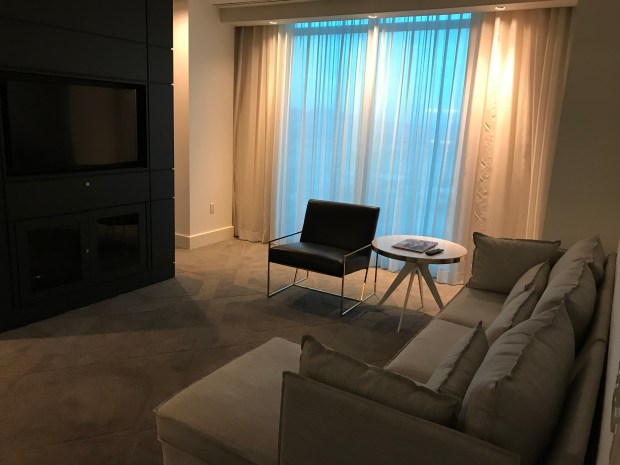
No your eyes aren’t deceiving you… the background color actually did change.

I said I wasn’t kidding about changing the background color if someone gave me a $25 donation, and much to my shock/disbelief/eternal gratitude, some kind soul has done just that. He didn’t request a specific color, but I felt like not changing it would be a betrayal of my promise. Because dark green is my favorite color, I decided to stick to the basic script while making it a little darker/richer. I think I actually like this one better, but let me know if it hurts your eyes or whatever. The funny thing is that I forgot to write down the hex code of the original color, so even if I do change it back after a month, it probably won’t ever be exactly the same. Like the ream of college poetry I fed to the shredder a few months ago, it’s lost to history.

And of course, THANKS from the bottom of my heart for the donation, mystery patron who I don’t know if you want me to use your name or not. I’m preparing some extra special curse words for my next post, dropping sometime this weekend.

(By the way, if you saw a “you’re/your” error in the title at any point, your eyes WERE deceiving you. I’d never do something so uncouth.)

The Amex Hilton Aspire card has a lot of great bennies, but the $100 Waldorf/Conrad credit ain’t one of ’em.

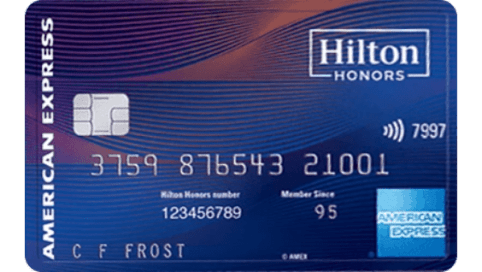
Hooray! It’s new Amex Hilton day! I’ve been excited about this day for a while, since I can’t wait to start diamonding my diamonds all over the place. (For those that have no idea what I’m talking about, one of the key benefits of the card is Diamond status in the Hilton Honors program for as long as you have the card.) There are a host of other great benefits too: airline credits, free nights, good earning rates, yadda yadda yadda.

One of the benefits that has been talked about a lot in the pre-release hype is the $100 on-property credit (dining, spa, etc) offered at Conrad and Waldorf Astoria hotels. The thinking was that this gave Hilton a way to offer a little something extra at these high-end properties, since Diamond status isn’t generally as rewarding as top-level status in programs like SPG and Hyatt.

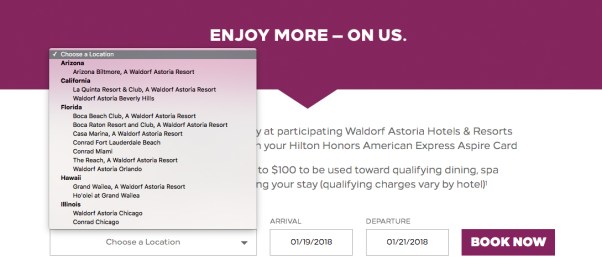
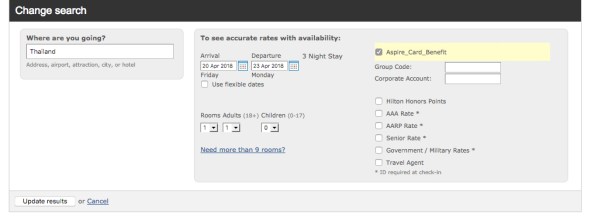
I started poking around as soon as I got my card, and I found that booking is thankfully really easy. You just go to the designated website (www.hiltonhonorsaspirecard.com) and enter your credit card to be verified. That takes you to a modified version of Hilton’s booking page that lists only WA/Conrad properties in a dropdown:

aspire search

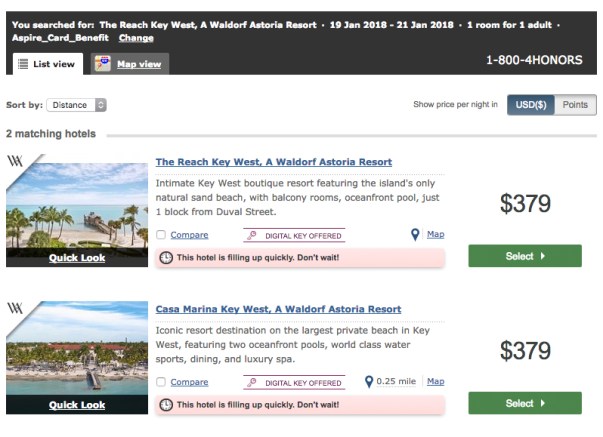
Once you pick your location and dates (don’t forget that the calendar enforces the two-night minimum stay required for the $100 credit), you’ll see the hotel you want, with only one rate type displayed:

aspire search results

If you want to change your search, as long as you don’t uncheck the Aspire card benefit box, you’ll continue to only see Waldorfs and Conrads.

aspire change search

That’s it! The “Aspire_Card_Benefit” rate type is hard-coded into the booking, so assuming everything goes as planned on their end with the implementation of the new rate type, the credit will be applied automatically. Yay, you’re saving $100!

But are you really? Here’s the problem with the Aspire rate: it doesn’t stack with any Hilton discounts or promotions, so it’s always equivalent to the best flexible rate. Since Hilton almost always offers a discounted flexible rate to Honors members, you may not come out ahead. I did some random searches on random dates, and here’s what I found:

Waldorf Astoria Beverly Hills
– Daily total (incl tax) for Aspire: $840; total for Honors discount: $815
Aspire is a better deal for stays up to 3 nights

Conrad Chicago
– Daily total for Aspire: $405; total for Honors: $392
Aspire is a better deal for stays up to 7 nights

Waldorf Astoria Chicago
– Daily total for Aspire: $605; total for Honors: $586
Aspire is a better deal for stays up to 5 nights

Hilton also offers special rates at certain hotels, like their “Long Weekender” promotion in which you save 50% on Sunday night if you stay on Friday and Saturday. Let’s look at a 3-day stay at the Conrad Chicago while factoring in the weekender rate. (This is also a flexible rate, so it’s a fair 1:1 comparison.)
– Daily total for Aspire: $463; total for weekender: $386
Aspire is a better deal only for stays of 1 night… and since Aspire has a 2-night minimum, it’s clearly a worse deal here.

And what if you don’t care about having a flexible reservation? For me, as long as I know that I’m going to travel, I’m okay booking non-refundable rates and saving money. It’s hard to justify paying 20-30% more per night just so I can cancel down the road. Here are some scenarios comparing the Aspire rate to the Honors discount non-refundable rate:

Conrad Chicago
– Daily total for non-refundable rate: $349
Aspire is a worse deal, given the two night minimum

Waldorf Astoria Chicago
– Daily total for non-refundable rate: $521
Aspire is a worse deal, given the two night minimum

Conrad Koh Samui
– Daily total for Aspire: $689; daily total for non-refundable rate: $540
Wow, here the Aspire rate loses you money even on a 1-night stay!

So, whatever you do, check the Hilton Honors rate for the hotel you’re looking at before you book the Aspire rate. If you need a flexible rate (or they aren’t offering a non-refundable rate), you may still come out ahead. However, it probably won’t be by much… and it should definitely be mentioned that cash saved vs. credits at the overpriced restaurant or spa aren’t exactly equivalent.

I still love this card, because I’m going to get a ton of value out of having Diamond status this year (I hope), and the airline fee credits will help offset the annual fee somewhat. Plus, now that Waldorf Astoria hotels are offering free breakfast to elites, the $100 credit is less important, since that’s probably would I would have ended up using it on. Just beware of any blog that factors the credit into the calculation of whether the annual fee makes sense, since it really doesn’t offset the fee at all. Everyone is talking about how the benefits are too good to be true out of the gate and that a devaluation may be coming, so let’s all keep our fingers crossed that this one is the first on the chopping block.

Since you read this far, maybe you want to consider supporting this blog? I’m committed to keeping it ad-free, so reader support makes a huge difference!

Ranking all the long-haul premium seats that have cradled my physical form

I had this idea a while ago and never got around to putting it into practice – basically, I want to keep a running list of all the long haul premium seats I’ve sat in, ranked in order of preference. One reason for this is that I just like making lists and rankings (I’m pretty sure most people in this hobby have at least a low-level fetish for spreadsheets and other types of data organization). More than that, though, I care vastly more about the seat than any other aspect of the premium experience. What’s more, the seat is most consistent aspect of that experience, so I think it’s the most useful from a review perspective. Flight crews can make the difference between an exceptional flight and a downright irritating one, and food can vary considerably from flight to flight, but in both cases it’s luck of the draw. On the other hand, the seat is the seat no matter what, so as long as you know what plane you’re on, you at least know what to expect in that department.

Relative comparisons are the most useful to me as well, which is why I think it would be fun to make a master list that ranks every premium seat, and I’ll keep adding to it when I take more flights. Because I only take a trip or two a year, it will grow slowly, so you don’t have to worry about me spamming you every other week with a new entry to the list.

I also encourage you to get really mad about the rankings, since nothing brings out the ire of anonymous internet people like raking something too high or too low. Disagree? Go back and read the comments on my “best non-first class way to cross the country” post, in which my raking of United at #5 out of 6 really pissed someone off (for being too high, mind you).

Without further ado, here we go. And look who’s at the top… United! I hope “bri” comes back to tell me how laughable this is. (Oh I suppose I should also clarify that I’m not including seats that aren’t really that interesting, like some random recliner seat in domestic first class. Also, pictures are from the airline unless noted.)

unitedGF

1. United Global First (777-200). “He’s bad, but he’ll die… so I like it.”  It’s ugly, but it will be gone soon… so this doesn’t really matter. But goddamn if it isn’t comfortable, even before United lays out the Polaris bedding (which doesn’t count in this ranking anyway). Plus, there’s almost an entire overhead bin’s worth of storage in and around the seat. I’m also impressed how much I liked the seat given its advanced age – I can only imagine how comfy these puppies were when they were new. The disadvantages are a lack of privacy (not that it matters all that much in an eight person cabin), a slightly annoying herringbone angle to the seat, and a dated TV screen. I like the new Polaris seat, but no more Global First is a bummer. A fancy Polaris-ized version of this seat would be fantastic.

sas biz 2

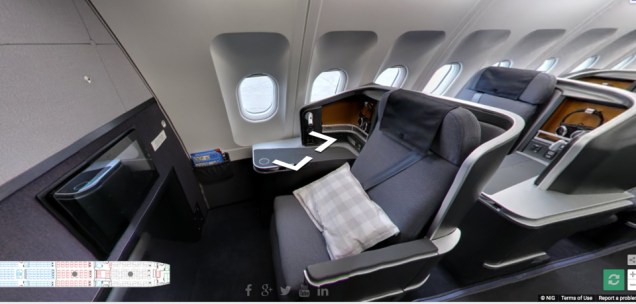
2. SAS Business Class (A340, bulkhead). People complain about the Thompson Vantage XL seat for being coffin-like, but on SAS, the bulkheads offer significantly more personal space. It almost feels like a first class suite in the amount of space you get – the only drawback is that you’re right on the aisle, and as a bulkhead seat, you’ll get a fair amount of foot traffic going past you on the way to the bathrooms (not to mention some galley noise). I wasn’t bothered at all by that, but I was enchanted by the high-res video screen, the overall design of the cabin, the seat’s various nooks and crannies for storage, the adjustable firmness of the cushion, and the fact that seat 9H gives you a great view of the A340’s wing and engines.

polarisssssssss

3. United Polaris (777-300, bulkhead). Two United seats in the top three?! I must be on their payroll and/or crazy. Part of that is probably due to the limited sample size and the fact that I haven’t flown most people’s overall favorite products (Cathay Pacific, Etihad, etc). But if you put aside the frankly irrational amount of hate some people have toward United, I don’t think you can deny that Polaris is a nice seat. It’s not perfect, but it manages to be incredibly private and reasonably spacious while also being fairly dense. This is another product where seat selection matters, but a window seat in the bulkhead is a great place to be, mostly due to the increased size of the footwell. The drawbacks include an inconveniently-placed cutout in the leg rest that caused my leg to slide off when in recline mode and a recline button (well more accurately a wheel) that’s easy to hit with your knee on accident. Storage is also kind of tight, although you do get a cabinet with a door and a decent nook underneath the foot rest. Plus, while it doesn’t factor into the physical comfort of the seat, the design of the cabin is gorgeous.

swizzbiz

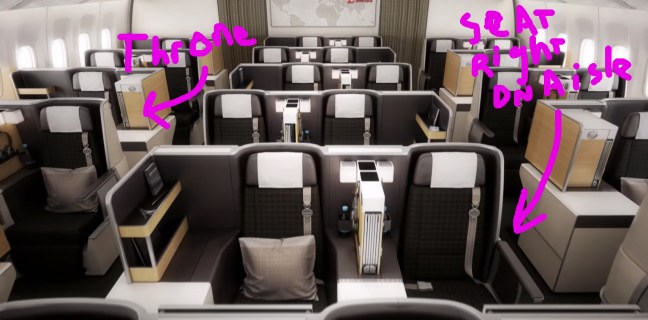
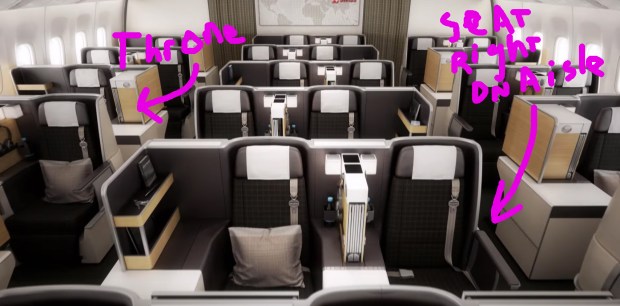
4. SWISS Business Class (777-300, throne seat). This is another one that’s very dependent on your seat selection. Specifically, you need to pay $200 to upgrade to a throne seat – otherwise you’re probably best off trying to find a better flight (unless you’re going to Zurich and want to fly direct). But the throne seats are wonderful bastions of privacy, and the insane amount of storage is great to have. They are a little coffin-like in bed mode, but despite the smaller-than-average footwell, I didn’t have a problem getting comfortable (and my feet are pretty big). This is another seat that gets an A+ for design, as well. Well maybe not an A+, but at least an A. They’re nice looking seats, that’s what I’m trying to say.

jetty-b

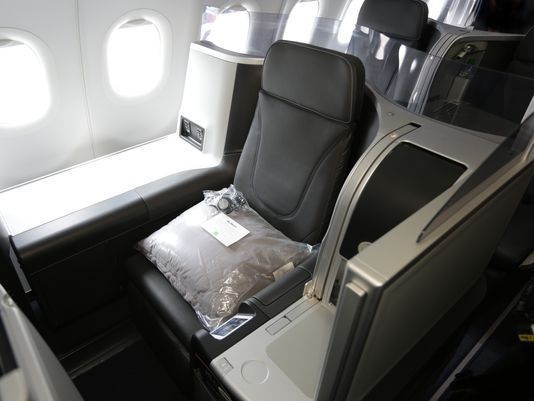
5. JetBlue Mint Suite (A321, throne seat). This is the same seat as Swiss plus a door and a shittier TV, minus a bunch of storage space and fancy finishing materials. I like the seat for sure, but I do think the door is kind of a gimmick that doesn’t give you all that much more privacy. I’d certainly trade the door for SWISS’s inflight entertainment, since JetBlue’s screens are smaller and pretty low-res. (Plus, you’re mostly limited to DirecTV, since their on-demand options suck.) The whole Mint experience is a lot more than the seat (amazing flight attendants and food, specifically), but while the seat is industry-leading for domestic flights, there are other longhaul products I prefer over it.

deltaa330

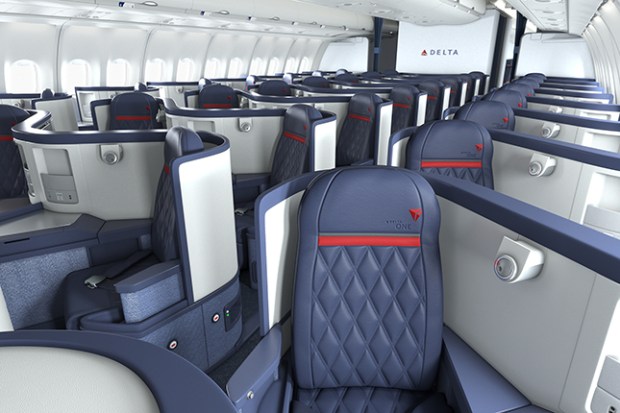
6. Delta One (A330). Okay, so this is supposed to be a great seat, because it’s in a reverse herringbone configuration, and that’s universally agreed to be the best. The problem is that it’s a really poorly executed iteration of this configuration. First, there’s almost no storage at all, so things slide around the console next to you any time there’s any movement in-flight. Second, because the A330 isn’t that wide, the seat itself is somewhat narrow, and I constantly hit my elbow on the privacy shield along the aisle when I was trying to turn around. The seat is also pretty hard, so despite the nice blanket you get, it’s not very comfortable for sleeping. The TV is okay – it’s not as crisp as on United or Swiss, but Delta has really good programming, and it gets the job done just fine.

united p.s.

7. United p.s. (757). This was my first flatbed seat, and I did like it. The seat itself is very comfortable, but the configuration just has too many drawbacks to rank any higher. There’s very little storage aside from a little compartment behind your head, the footwell is small, and most importantly, there isn’t aisle access from each seat. I always take the window seat, which meant that I had to engage in some Cirque-du-Soleil style contortionist moves in order to get out to use the bathroom mid-flight. I don’t like having to choose between my beloved window seat and access to the bathroom, so any cabin that doesn’t offer full aisle access is going to rank lower on the list.

So that’s the list for now…  Is your blood boiling after reading my rankings and rationalizations? I sure hope it is! I’ll come back and update it in a couple months, at which time I’ll add KLM business class and British Airways first class and you can get angry all over again.

Since you read this far, maybe you want to consider supporting this blog? I’m committed to keeping it ad-free, so reader support makes a huge difference!


My year in bonuses and my (tentative) card strategy for 2018

Now that 2018 has arrived, it’s time to look back at how I did with sign-up bonuses last year. As policies become more restrictive, mining new bonuses is getting trickier, which is why I have started off this year paying a little more attention than I used to about improving my return on normal spending. Nothing crazy, just things like using Gyft to buy Target gift cards using my Chase Ink while I’m waiting in line a Target (rather than just paying with the Blue for Business), or never refusing an opportunity to use Apple Pay with my Freedom card.

I still managed to do pretty well last year, though. This list comprises both Justine and I, since our finances are completely merged, and I have included any bonus that was 5000 points or above.

Membership Rewards:

  • 5000 – Everyday referral bonus
  • 50,000 – Premier Rewards Gold sign-up bonus
  • 5000 – Premier Rewards Gold authorized user bonus
  • 60,000 – Platinum sign-up bonus
  • 5000 – Verizon Amex offer
  • 10,000 – Pay over time enrollment bonus
  • 15,000 – FXIP enrollment bonus
  • 15,000 – FXIP bonus for 5 wire transfers
  • 15,000 – Platinum referral bonus
  • 25,000 – Green sign-up bonus
  • 5000 – Platinum authorized user bonus
  • 60,000 – Schwab Platinum sign-up bonus

As you can see, Amex continued to be really lucrative for me this year, even though I did end up burning all of those points and then some by the end of the year. I love how many ways there are to earn Amex points, even though I’m starting to run out of sign-up bonuses at this point.

Ultimate Rewards:

  • Nada. Zip. Zilch. See why I like Amex so much?

ThankYou Points:

  • Nope. Canceled a Prestige card halfway through the year, so I’m cooked until 2019.

Airline Programs:

  • 45,000 Korean Air Skypass miles – Skypass Visa sign-up bonus
  • 50,000 AAdvantage miles – AAdvantage Platinum sign-up bonus, later matched to 60,000 after a couple phone calls.
  • 50,000 Sky Miles – Delta Gold sign-up bonus (even though I’ve had the card before!)
  • 30,000 Mileage Plan miles – Alaska Visa sign-up bonus

Hotel Programs:

  • 160,000 Hilton points – 2x Amex Hilton sign-up bonuses
  • 40,000 Hilton points – 2x Amex Hilton referral bonuses
  • Two weekend nights – Citi Hilton Reserve sign-up bonus

Other:

  • 50,000 Arrival miles – Barclaycard Arrival+ sign-up bonus

So what’s my tentative strategy for 2018? Well, I’m currently on hold, since I have a few spending targets I’m working on right now. On my current cards, I have around $400 left to get the second part of my Delta Gold sign-up bonus, and I need to spend $1000 on my Aviator Red card in order to get the 5000-mile retention bonus I signed up for. Plus, next week will see the launch of the Hilton Aspire card from Amex, and I plan to apply immediately, so that will eat up $3000-$5000 in spending over the next few months.

After that, if the SPG Amex is still available, I’ll sign Justine up for one. I’d like to get myself the business version as well, but I will have to reshuffle my Amex cards to make room at that point. (While Amex’s limit is now claimed to be five credit cards, they’re unfortunately still capping me at four.) The USBank Altitude could be interesting if I’m in the mood for a cash-back travel rewards card, and I’m also interested in the JetBlue card from Barclay, as long as they offer the 60k bonus again. (I kind of regret not signing up for this when it was publicly available.) Finally, I plan to pick up one or two more Alaska cards, and Justine will probably get the Hilton Ascend at some point. This is only a rough outline, though, since things always come up that throw my plan off – it could be a surprise bonus on a card I wasn’t thinking about, or maybe a program devaluation that alters a certain card’s value proposition.

As for cards I’m going to cancel/keep, here’s my plan:

  • Chase Freedom ($0) – Keep. Duh.
  • Chase Freedom Unlimited ($0) – Keep, although I may try to convert it to a second Freedom.
  • IHG ($49) – Keep. $49 for an unrestricted free room certificate is a no-brainer.
  • Citi ThankYou Preferred #1 ($0) – Keep, only because I don’t want to reset my ThankYou points sign-up bonus clock.
  • Citi ThankYou Preferred #2 ($0)- Keep, see Citi Thank You Preferred #1.
  • Hyatt ($75) – hmmm… The category 1-4 certificate is decent, but it’s not a slam dunk value for $75 given my travel habits. I’d churn it if I thought I had any chance of getting reapproved. I know it’s not under 5/24, but the last time I applied for it, Chase raked me over the coals for having too many cards. Since I still bank with them, I should be careful. I have a while to decide, so I’m leaving this one as a maybe.
  • City National Signature ($0) – It’s a no-fee card, and I may want to convert it back to a Crystal one day. Plus, since I don’t care about my relationship with CNB, I can use this card for “medicine” without really worrying too much about my account getting shut down.
  • Barclay Aviator Red ($95) – Definitely cancel. I should have done this the first time around, but I wanted to see the FlightCents promo through to the end.
  • Citi AAdvantage Platinum ($95) – Not sure. I have to decide if it’s worth $95 to avoid restarting the 24 month clock. If I keep it, I can apply for another one next year and get the bonus again. I’ll probably try for a retention bonus and go from there.
  • Korean Air Skypass Visa ($80) – I need to do some research here. There’s a meager automatic retention bonus of 2000 miles, so I’ll definitely try for more. It also matters whether the USBank Altitude is still restricted to current USBank customers, since I do want to get that card at some point. Most likely I will cancel it, though.
  • Barclay Arrival+ ($95) – I don’t get what’s so great about this card. It’s a 2% cash back card, but you can only use your cash back on travel purchases over $100 and only when you have at least $100 saved up. Who is funneling that much spend onto this card to make it worthwhile? I get so annoyed with articles that talk about $1000 train tickets and say, “This is a great use for all of your Arrival+ miles.” Aside from the most proficient manufactured spenders, are there really people out there who spend $50,000 on this card so they can get $1000 toward travel? So yeah, I’ll either cancel it or downgrade it so I can keep earning a few bucks here and there from the travel community.
  • Amex Hilton #1 ($0) – I’ll keep it until I need to cancel it to make room for other Amex cards.
  • Amex Hilton #2 ($0) – Ditto.
  • Amex Green ($95) – Cancel. Double duh.
  • Alaska Visa Signature ($75) – Oh Alaska Visa. One of the last true churnable cards. One day you’ll join all the rest of them, but until that day, I will never pay your annual fee.
  • Amex Platinum ($550) – Cancel, but not before I get a 15k bonus for referring myself (well, for Justine referring me).
  • Amex Schwab Platinum ($550) – Cancel and switch to a normal Platinum (the one that I just opened using Justine’s referral link).
  • Delta Gold Amex ($95) – Can I cancel this one without running afoul of Amex’s police squad? I think I’m gonna.
  • Amex Everyday ($0) – Keep, since this card always has the most Amex offers on it, for some reason.
  • Amex Everyday Preferred ($95) – Keep. The 4.5x on groceries category bonus is huge for me.
  • Chase Sapphire Reserve ($450) – Not sure. I got around 5000 points more on travel/dining spend than I would have with a Sapphire Preferred, so that more or less covers the $55 (net) difference in fee between the two. However, most of my restaurant spending for the first half of last year went on the Blue for Business, so I expect that will be higher this year. If it is, I’ll keep it; otherwise I’ll downgrade to a Sapphire Preferred.
  • Amex Premier Rewards Gold ($195) – Cancel.
  • Another Barclay Aviator Red ($95) – Haha, I forgot we even had this one until I looked at my spreadsheet. Cancel, obviously.
  • Chase Ink Cash ($0) – Keep. Mega duh.
  • Amex Blue for Business ($0) – Cancel and replace with the new Blue that earns 2x on everything.

Okay, that’s it! Anyone have any burning disagreements with me about any of the above? I’m curious to hear your thoughts. I actually do listen to you guys, you know… The last time I wrote about my strategy, you successfully talked me out of my plan to switch more spending onto my Freedom Unlimited, and I’m happy you did. I cherish you!

Since you read this far, maybe you want to consider supporting this blog? I’m committed to keeping it ad-free, so reader support makes a huge difference!

Legally SWISS

Blogger’s note: I just reread this before publishing, and I think I may have just written 2200+ words while literally saying nothing at all. That may be a new record for me… but at least I’m warning you up front that you may get nothing (except boredom) out of this post. Read on at your own risk.

I swear this blog isn’t going to become all-SWISS all the time, but I did want to write a post about the recent first class award availability issue and subsequent fallout. To bring you up to speed, SWISS generally doesn’t make award space in their drool-worthy first class cabin available to partner loyalty programs. That kinda sucks, given that this is what you’re missing out on:

swissfirst

Given that policy, people were understandably excited when a bunch of SWISS first class space showed up across multiple Star Alliance programs one morning a couple months ago. I saw the news on my phone right when I woke up and rushed over to my computer to try to book the return leg of our upcoming trip via Zurich, but by the time I got there, it was already snapped up (or turned back off by SWISS).

tweety

My inability to wake up at a decent hour ended up saving me a huge headache, though, since I would have quickly canceled my BA booking if I had managed to book the flights I wanted on SWISS, leaving me no good options if the SWISS tickets didn’t pan out. Lo and behold, SWISS up and canceled every ticket booked through Aeroplan (the obvious program of choice given that it’s only 70,000 miles with no fuel surcharges, compared to 110,000 through United), saying that it was a mistake in the first place. If I had booked one of those tickets, I would have been livid, regardless of whether or not they were in the right.

So that brings us to now, where the situation is still being litigated both in public and in blog comment sections all the way from BoardingArea to, uhh… Saverocity? (I don’t know if anyone on Saverocity has written about it, but that’s the other blog network that came to mind.) I’m curious about it, and unlike a lot of posts where I have a very strong opinion that I want to profanely rant about (like how you shouldn’t fucking split goddamn infinitives), I’m more interested in asking questions. At first, I felt like SWISS was obviously in the wrong, and that everyone had a legitimate grievance against them. Now I’m not so sure.

I should also add that one of the main things keeping the discussion going is Matthew Klint’s crusade for justice being documented over at Live and Let’s Fly. Klint’s argument is that Aeroplan promised him first class direct travel on SWISS, so that’s what they owe him… and he bought a first class revenue ticket as a way to establish the damages he feels he is owed. However you feel about his gambit to hold SWISS and Aeroplan accountable, I at least think it’s valuable to have people out there willing to push the limits of frequent flyer programs to their absolute extreme… otherwise we’d never know exactly where those limits were. (I liken it to Vihn over at Miles Per Day basically daring banks to shut him down, although nowadays it mostly seems like his readers are the ones getting shut down.) It’s the points and miles equivalent of the entomologist who subjected himself to thousands of stings from a wide array of insects as a way to document the pain spectrum of those stings. Just like suing SWISS/Aeroplan over a canceled award ticket, I’d never do it, although it’s interesting to read about.

Thing is, I can’t imagine him succeeding. But then again, I couldn’t imagine Trump becoming president, so what do I know. Unfortunately we probably won’t get much of a  satisfying resolution, since the most likely option is some sort of confidential settlement. But looking at the original issue, there are a few key areas that any case would depend on, and I hope someone with more legal knowledge than me (so, any legal knowledge at all) will weigh in in the comments. Klint has picked up a fair amount of hate from various corners of the blogosphere, but I’m more interested in digging into the actual issues than giving my opinion on what he’s doing.

Key issue #1: Is Aeroplan award travel not permitted on SWISS first class? Does it matter?

Aeroplan’s award chart says that “SWISS First Class is not available for reward travel.” Most of the haters are using this as a smoking gun that proves Klint is delusional. The argument is that Aeroplan tells you that you can’t book SWISS first class, so any award space is clearly a mistake, and you should have known better, and also you suck. And sure, an airline can cancel a ticket issued by mistake, but that has always been interpreted to mean a mistake in the price. In this case, the ticket was issued at the publicly published price, so the mistake was that the ticket was available at all. That doesn’t have an obvious corollary in the world of revenue tickets, which makes it a tough problem to evaluate based on past precedent.

To me (and to many others), it didn’t seem like an obvious mistake, and I was surprised when I read that tickets were being canceled. First, SWISS has released first class award space to Aeroplan in the past, and they honored those tickets. So there is some past precedent that award space sometimes becomes available, and that those tickets are honored. Second, the Aeroplan chart doesn’t say that SWISS first class awards are not permitted, it says they aren’t available. That opens up a lot of ambiguity, because when you log into their site and book a ticket, you never look at the award chart. You see the flights that are available, the price, and you book them. At best, Aeroplan is presenting contradictory information by saying on one page that something isn’t available while literally making it available on another page.

So that’s question-for-a-lawyer #1: is it correct to conflate “not permitted” and “not available”? (The use of the phrase “not permitted” is important, because that’s the wording SWISS used in their incredibly disingenuous (and demonstrably false) explanatory email for why they canceled the tickets.) For a discipline that hinges so much on the definitions of individual terms, you’d think the difference between “not permitted” and “not available” would matter, so I feel like a good lawyer wouldn’t let SWISS get away with this conflation.

Question-for-a-lawyer #2 is whether any of this matters. Section 7.1.1 of SWISS’s Conditions of Carriage basically says they can do whatever they want for any reason: “We may, through reasonable exercise of our discretion, refuse to carry you or your Baggage if we have given you written notice in advance that we will not carry you on our flights after a particular date. In such cases you will be entitled to a refund.” Basically, if they tell you that they don’t want to honor your flight, then they don’t have to honor their flight. Honestly, I assumed they had some sort of “we can fuck you over for any reason or for no reason at all” clause somewhere in there, but this is even more open-ended than what I was expecting.

Say for discussion’s sake that this was actually a mistake, and that SWISS didn’t intend to change their normal policy of not allowing partner award bookings in first class. Wouldn’t reverting to their (vaguely) documented policy be considered a reasonable exercise of their discretion? And just because they allowed this a handful of times in the past doesn’t mean that they’re obligated to continue to allow it forever onward into infinity.

Key Issue #2: How significant is it that this only applies to Aeroplan?

I’m assuming that the vast majority of bookings were made through Aeroplan, because it’s significantly cheaper. However, some people did book through United, and reports so far are that those tickets weren’t canceled. What’s different between United and Aeroplan besides the “not available” verbiage on Aeroplan’s award chart? It sure seems to me like SWISS is standing by that one line of text and using it as a get out of jail free card to avoid having to give out first class seats Oprah-style.

The inconsistency there seems problematic, since for one reason or another, SWISS is acting like they have leeway with Aeroplan bookings that they don’t with United. Question-for-a-lawyer #3 is whether SWISS honoring United tickets contradicts the broader reason for cancelation outlined in 7.1.1 (since it’s arguably not a reasonable exercise of discretion to cancel tickets booked through one Star Alliance partner but not through another). If that’s the case, then SWISS’s only leg to stand on is the whole available vs. permitted thing. If I were the plaintiff here, I’d be much more confident defending that available and permitted are two different things than having to argue around their incredibly broad self-granted rights to refuse carriage.

Key Issue #3: How do you assess damages? And who do you sue?

I kind of feel bad for Aeroplan here, since I absolutely don’t buy SWISS’s bullshit contention that Aeroplan issued the tickets as a rogue actor (since United also issued the same tickets). The inventory popped up in their reservation software, they issued the tickets, SWISS canceled them unilaterally, and Aeroplan was left holding the bag with their customers. For legal purposes, Aeroplan is the entity that sold the ticket, so they’re the ones who you’d sue if you were going to sue someone.

That’s problematic, though, since I don’t really know if you can argue that Aeroplan did anything wrong. To wit, section 24 of their Terms and Conditions for award tickets: “All flight reward bookings, including routing validations, are subject to approval by Aeroplan and/or the Partner Airlines on the itinerary and may change with or without prior notice.” Question-for-a-lawyer #4 is if that’s as damning for any legal action against Aeroplan as I think it is. To me, it seems pretty cut-and-dried: the partner airline didn’t approve the booking, so it gets canceled. Regardless of whether the award should or shouldn’t have been available, Aeroplan gives themselves the right to cancel a ticket if the other airline doesn’t approve it. I don’t know how you could realistically bring a case against them at that point.

However, the mention of the partner airline having responsibility over whether the ticket is honored would seem to give the plaintiff standing to sue SWISS themselves, since they’re the ones who may have acted in bad faith by not approving the booking. (I suppose question-for-a-lawyer #5 would be to ask if that’s true or not.) I should note that it doesn’t sound like Klint is moving in that direction with his action, although I don’t know any more than what he has put up on his blog so far.

That leads us to the question of damages, and I think here is where Klint lost a lot of people. His argument is that the damages he suffered by either Aeroplan or SWISS acting in bad faith is the cost of a revenue ticket, which he then bought using all that sweet, sweet blog revenue (I kid). This reminds of a chapter from Priceless, a great book about how consumers perceive prices for goods and how companies manipulate those perceptions. One of the chapters is about legal damages, and the big example is the McDonald’s hot coffee incident, in which the damages awarded were equal to one day of McDonald’s revenue from coffee sales. The jury felt this was fair – a person was burned and disfigured, so it’s only fair that McDonald’s give up a day’s worth of revenue. But why a day? Why not an hour or a week? The reason is that the lawyer wanted to come up with a big number that would be grounded in something that intuitively made sense to the jury. The justification of the number is irrelevant, though – it was arbitrary all along.

The same issue is at play here: you could argue as Klint does that the damages were equal to the cost of the flight that wasn’t honored, but you could also argue that the damages were equal to the price difference between an alternative (business class) flight and a first class flight. Also, the price of a flight fluctuates all the time. If you bought the flight at the airport two hours beforehand, it would presumably be more expensive than if you bought it far in advance of your date of travel. Should the damages be equal to the most expensive the flight has ever cost in the last year (or two years or ten years)? The flight cost 70,000 Aeroplan miles, so it could also be argued that the damages should be equal to the monetary value of those Aeroplan miles, but then you’d have to figure that out.

In the end, the fact that this is such an ambiguous mess would probably convince me just to slink away and lick my wounds until another good redemption opportunity came along. You win some you lose some in this hobby, even if some of those losses are harder to swallow than others. There are just too many variables to mount a credible legal case, and the more I think about it, the less of a slam dunk it seems in my mind. I believe that SWISS is 100% in the wrong for canceling the tickets, but I don’t think that carries over into a legal sense. I just think it was a dick move on their part… and unfortunately you can’t sue over that. (Question-for-a-lawyer #6: can you???)

So what does everyone else think? Any lawyers want to answer some of my questions? All in all, this is a really interesting situation to me, and I’m interested to see how it plays out with any claims people make against either airline.

Since you read this far, maybe you want to consider supporting this blog? I’m committed to keeping it ad-free, so reader support makes a huge difference!
The SWISS Chronicles – My foray into 4A

I wrote about SWISS a bunch last spring, since I booked a business class award from Zurich back to San Francisco. Here’s a list of links to peruse, presented “real trip report” style as if I’m a real blogger:

SWISS Bliss
The king died on the throne
SWISS Diss
And finally, a review of the flight

Quick summary – when I originally booked the flight, most of the throne seats were blocked for elites, but I managed to get one in the back. Then, in the isthmus of time between when SWISS unblocked those seats and when they started charging for them, I managed to snag seat 4A, and I was really. excited. about it. I was too clever for my own good, though, since a week later I was bumped to a middle seat, forced to pay to cash to upgrade back to a throne seat in the main cabin. It was a bummer, but to be honest, the seat is so private that I barely noticed the world outside my little cubicle, and I had a pretty nice flight.

Backing up for a sec, for those who are completely lost at this point. On the 777-300 that SWISS normally flies between San Francisco and Zurich, there are two rows of business class (4 and 5) that comprise a “mini-cabin” and then eleven more rows behind the galley. Like I said, the big cabin is fine, although all the passengers except the handful of people in first class and the aforementioned mini-cabin pass through it during boarding, so it’s a little hectic. (On the flipside, you can watch your boss from a previous job walk past you on his way to 10-abreast economy and thank your stash of points for making you look dope AF (although that may have just been a coincidence).) The seats are staggered 1-2-2, which means some seats are fantastic (the thrones) and some are pretty terrible, since they have no storage space and are right on the aisle with only a thin armrest for separation.

swizzbiz

So, windy story short, the mini-cabin is the place to be (unless you want to be in first, but you’re gonna have to break out the lawyerin’ in that case). It’s quiet, intimate, and ahead of the boarding doors, which are all good things. Then, within the mini-cabin, seat 4A glistens like the star on top of the xmas tree, since it has even more room than the other thrones. Because it’s in the bulkhead, the foot well is bigger and [I’m to understand] there’s more room between you and the wall.

For the trip I was booking in the fall, I had been monitoring availability for all three alliances, and for a while Star Alliance showed absolutely nothing. At one point, however, a bunch of dates populated with SWISS space out of SFO. Honestly that wasn’t my first choice, since I wanted to try a new product, but I decided to book it anyway, rather than waiting it out to see if something better came along. Plus, the schedule works out well, since I can work a full day before the 8PM flight and then arrive in Rome in the evening, which should help us avoid jetlag. And if I’m lucky, the Polaris lounge will finally be open at SFO, although I’m not banking on it.

So back to 4A… As is my wont, I’m especially fixated on it because it was cruelly ripped from my grasp once already, even though I know it’s not so great. Oh and also, Justine and I are flying together, so it’s pretty ridiculous for either of us to pay extra for throne seats. (My thinking here was twofold: first, we barely talk to each other on planes anyway, so sitting in separate business class pods has always been fine in the past. Second, Justine values storage space above all else, and the throne seats have TONS of storage.) 4A and 5K were both available, so I put us at either end of the mini-cabin. Assuming I don’t forget to take pictures, I should be able to get a good comparison of the difference in space between the bulkhead and a normal seat.

No, I wasn’t jazzed about spending $400 to get the seats I wanted… especially since I don’t trust SWISS not to kick me out of the seat and put me in one of the ones in the main cabin. Still, it’s a long flight, and that’s less than the fuel surcharges on a lot of other airlines, so what the hey. This expenditure will also prevent me from dropping $1000+ to change our flight to Lufthansa First Class, should it become available a few days beforehand. Or at least I hope it does. I’m significantly more fixated on LH first class than 4A, so I’m hoping my desire not to waste $400 will prevail.

Anyone else digging on 4A? How bout other experiences on SWISS? It gets mixed reviews online, but I liked it overall. (Also, it just occurred to me that I’ve written 800+ words about selecting a seat on a future flight. Well at least you know the title of this blog isn’t an exaggeration.)

Since you read this far, maybe you want to consider supporting this blog? I’m committed to keeping it ad-free, so reader support makes a huge difference!
Am I overhyping Hilton Diamond status? Probably, but no one ever died from having high expectations… DID THEY?

aspirecard

Unless you’ve been living under a rock that blocks your wifi signal, you know that Amex is aiming to make a big splash when their new lineup of Hilton cards debuts next week. New Amex cards usually mean new sign-up bonuses, so it’s always exciting when they come out with new products (even though it’s pretty likely that some existing Hilton cards will preclude cardholders from getting bonuses on the new ones).

Personally, I’m most excited about the Aspire card, despite its $450 annual fee. In fact, I’m so excited that I would get the card even if it didn’t offer a sign-up bonus, since the benefits are just that good. Off the top of my head, you get a free weekend night, a $250 credit at a Hilton Resort, and a $250 incidental airline fee credit, plus Diamond status in the Hilton Honors program. The fee credits risk sucking us all into a vortex in which people debate whether those credits offset the annual fee until we all run out of oxygen and die, but I’m looking past all that to the Diamond status perk.

Part of it is emotional (read: dumb), in that I’ve never had top-tier status in anything, due to the fact that I don’t spend months out of the year on the road. That said, I have always been a fan of IHG’s poorly-named Ambassador program, since it basically lets you buy upper-tier status at Intercontinental hotels no matter how little you stay. I view the Aspire as offering the same thing – for $450, you too can be a Hilton Diamond member, which on its own seems like a great deal. (Can you imagine what would happen to the blogosphere if Hyatt offered people Globalist status for $450?)

If I were already a Hilton Diamond, I’d be furious, since this will add tens of thousands of Diamonds to the ranks, making upgrades (which aren’t guaranteed in the first place) that much harder to come by. As a non-Diamond, however, I’m excited to be one of those people pushing Mr. or Mrs. OG Diamond out of their suite. In fact, I wouldn’t be surprised if Hilton created a super-diamond tier for really loyal members to keep them from decamping to another chain.

My experience with Hilton Gold status (earned through my Amex Platinum card) is pretty good so far, although with a small sample size. I was upgraded to a room on the executive floor at the Hilton CPH Airport (no longer a Hilton), and from a junior suite to a full suite at the LondonHouse Chicago. In various Hilton Garden Inn stays, I’m always at least on the top floor, although no one chooses to stay at a Garden Inn because of the upgrade potential.

However, next year I have a bunch of Hilton stays on deck, and I’m excited to jump up the upgrade priority ladder with Diamond status. I don’t know if it will end up doing anything for me, since it’s still up to the individual hotel, but I guess I’m willing to float $450 to see. My year with Hilton will start at the Waldorf Astoria Amsterdam next month, then the Conrad Chicago, followed by the Wit (Doubletree) Chicago, and ending the year at the Aleph Hotel (Curio) Rome and finally the Hilton in Venice. I’ll probably have some HGI/Hampton stays sprinkled throughout there as well. Overall I’m going to be spending around 20 nights in Hiltons next year, so I’ll have plenty of opportunity to see whether Diamond status is worth it.

There’s a guy who comments on various blogs (DCG or DCS or something) who insists that Hilton will washcloth your balls upon check-in if you have Diamond status, although it kinda seems like he might be exaggerating. Others seem to think that Diamond isn’t worth all that much more than Gold, save for the marginal points earning bonus and guaranteed executive lounge access. So, in the words of my favorite pop star, “Let’s say mixed reviews.”

mixed

Regardless, I’m looking forward to getting a taste of top-tier hotel status, and I’m sure my annoying reviews will now include all the status-specific stuff that drives me crazy when I read about the resplendent breakfast buffet at the Park Hyatt Wherever.

And not for nothing, the other benefits on the card do look fantastic. If the airline credit works like the Amex Platinum, that’s $250 in American Airlines gift cards I can add to the pile. The $250 resort credit isn’t a huge draw for me since I don’t plan to stay at any Hilton resorts anytime soon, although if I ever do, I’m sure I’ll appreciate it. And the free weekend night speaks for itself. The only thing that’s slightly underwhelming is the points earning. 14 points per dollar at Hilton hotels seems like a lot (since, coupled with Diamond status, you’d earn 34 points per dollar at Hilton), but Hilton points themselves are so weak, that’s not that much better than Hyatt’s credit card (just over 8 points per dollar). Aside from SPG, though, no one gets hotel cards for the points earning, so that doesn’t bum me out too bad.

In the end, I give this card a rating of 97 breakfast buffets out of 114 (in other words, 41 diamonds out of 55). It’s probably useless to review a card before it has been released, but I’m going to stand by my rating. Who else is ASPIRING to get the Aspire card? Is anyone else drooling diamonds at the thought of Diamond status, or are you just waiting around to delight in my eventual disappointment?

Since you read this far, maybe you want to consider supporting this blog? I’m committed to keeping it ad-free, so reader support makes a huge difference!

How I’m doing with Barclay’s AAdvantage “Flight Cents” pilot program

I’m on record as not loving American Airlines or their loyalty program. I mean, both are fine, but I can’t imagine being “loyal” to American Airlines out of anything deeper than geographical convenience. I’ve had decent flights on American, and I’ve made decent redemptions through AAdvantage — nothing in either direction has ever blown my socks off, but I think that’s about par for the course with US carriers. I’ve also (lately) found American to be a lot better about releasing award space than United, whose lack of availability on their own flights is downright insulting, and Delta, whose pricing gets more and more egregious with each passing week.

Still, while I’d never considered buying AAdvantage miles even on sale, Barclay’s new Flight Cents program provided too good of a deal to pass up. It’s a basic round-up program, except (like with most round-up programs), the whole rounding up process is a ruse designed to trick you into spreading a one-time purchase out over hundreds of little purchases. In theory, Barclay rounds every purchase up to the next dollar and then gives you one mile per each cent added on to the total. That way, you don’t notice that you’re spending $100 at the end of every month on 10,000 miles… except that that’s exactly what you’re doing.

flightcent

When I first wrote about the program, I went through some potential ways to maximize the earnings, since it isn’t as easy as all the “Earn 300,000 AAdvantage miles for only $3000!!!!” headlines seemed to suggest when the program was first launched. After all, you’d have to spend a lot of money on the card to round up enough cents to get to 300,000 miles (that’s 50,000 miles for six months, which represents the monthly cap and the length of the pilot program, respectively).

My original plan was just to set an auto-reload on my Amazon account for $1.01 each day, which would get me around 3000 miles per months. However, the more I thought about it, I wanted to earn more. After all, I consider it an uncommonly good deal, and I rarely purchase miles/points outright. (The last time I did so, it was to take advantage of a 50% bonus on SPG points, which I then transferred to Virgin America and then Alaska – another uncommonly good deal.)

While cash is always better than points, I’m reasonably confident I’ll be able to use these points for much more than the purchase value. At 1 cent per point, you can fly in business class from SFO to JFK for $325, or first class for $500. SFO to Chicago in first class is $250. US to Europe in business class is $575 (provided, of course, that you can find non British Airways awards and avoid the fuel surcharges). Each of those represents a substantial discount over even the lowest cash rates I’ve ever found on those flights. Even for BA first class with fuel surcharges, you’re looking at around $1350 one way, which is about on par with what most travel blogs consider a great deal (except of course you wouldn’t earn any miles). But the point is that even if you used your Flight Cents miles this way, you’d still get a pretty good deal.

So, now that my motivation was sufficiently stoked, I needed to figure out how to boost my mileage earning. The answer will be obvious to anyone who uses Amazon reloads regularly, which is to manually make several $1.01 reloads every day. Amazon makes it super easy – it takes less than 5 minutes to do 10-15 reloads. Now, I had assumed that Barclay would either process a bunch of $1.01 purchases on the same day as a single transaction, or failing that, that the Flight Cents program would pretty easily detect this type of gaming and disallow the earnings. Happily, neither of those things turned out to be the case, and I was off to the races.

I could have gone crazy and tried to earn the maximum each month, but despite how good of a deal those miles are, I don’t have a spare $500 per month to spend on this kind of thing. However, $100 per month for 10,000 miles over the six-month trial seemed like a reasonable expenditure, so that was my goal. The only hitch is that my card’s annual fee came due at the end of December, meaning I would have to factor the fee into whatever miles I ended up buying through the program… or just cancel the card, which was my actual plan, since I hadn’t used it after the single purchase that was required to earn the bonus ($1.50 at a parking meter in Berkeley).

I thought maybe earning a retention bonus would ease the sting of the annual fee, so I called Barclaycard yesterday to see what I could get. Naturally, I had to explain why I had barely used the card, although the rep I spoke to didn’t ask me about the hundreds of $1.01 Amazon purchases at all (thankfully). I went through the standard churner spiel, at which point he flat out asked me if I had only opened the card for the bonus with no intention of ever using it. I said yes in a roundabout way that took my listener across the country to O’hare, where I saw an ad for the card that initially piqued my interest (not true), and so I decided to open the card and give American Airlines another chance (also not true), although I was admittedly motivated by the bonus (definitely true).

Finally, after some back-and-forth made slightly comical by the fact that the guy had the hiccups really bad, he offered me 5000 miles for $1000 in purchases over 3 months. I took it, which means that by the end of Flight Cents (assuming I continue at my current pace with the Amazon reloads), I will have earned 66,000 miles for a cost of $695 or 1.05 cents per mile.

That’s not the total cost, of course, since there’s an opportunity to the cost of those Amazon reloads. Let’s say that instead of $600 in Amazon credit via reloads, I had purchased a $600 gift card with my Chase Ink, which would have given me 3000 points. If we’re being extremely generous, let’s say that those 3000 points are worth four cents each, since that’s about average for a longhaul business class redemption. That means I have to tack another $120 onto the cost, which brings the net cost per mile up to 1.2 cents per mile.

That’s actually not that much better than when American runs mileage purchase bonuses, although those bonuses usually require you to spend thousands of dollars to get the best value, whereas Flight Cents offers an even better value with a much smaller cash outlay required. (There’s the time involved in doing the actual reloads, but my time is worthless, so that’s fine.)

In the end, I’m curious to see what becomes of Flight Cents after the trial. It would be cool if they kept it around for good, but I have to imagine that they’ll introduce some sort of daily cap or other method designed to keep the program to being gamed so aggressively. Or maybe they don’t care, since they’re earning swipe fees on each of those reloads, and I’m using the card instead of burying it in my credit card binder. I’m curious to hear others’ experience with Flight Cents. Have you been earning tons of AAdvantage miles, or have you mostly ignored it?

Since you read this far, maybe you want to consider supporting this blog? I’m committed to keeping it ad-free, so reader support makes a huge difference!
The way the wind is blowing, 2018 edition

I don’t know about you guys, but I think it’s time for a self-indulgent year-in-review post. This has been a fun year of blogging, and it’s been neat to see the blog pick up a wisp or two of steam. I pulled in 73,883 views this year, which is pretty paltry for a real points & miles blog, but it’s pretty good compared to 2015 (143 views) and 2016 (3730 views). My goal at the beginning of the year was to write 125 posts and average 50 views per day by the end of the year; I wrote 137 and averaged around 208 daily views, so I’m happy with that.

Here’s a list of the most popular posts of the year:

stats

Interestingly, I receive most of my traffic from incoming links, although the most popular post of the year has been all organic traffic. (Also, I say “incoming links” but I really mean Gary Leff, whose inclusion of my posts in his daily roundups is the only reason most people know about me.) I wasn’t sure anyone would really care about my timeshare experience, but I guess it turns out it’s a topic of great interest. And, hilariously, if you google “maui timeshare presentation,” my blog is one of the first that comes up. Other search terms that put me on the first page of results include “SAS business class best seat,” and “bullshit emotional support animal.” Those are both pretty good.

I’m also happy that my post about Allegiant’s clueless executives made the most-viewed list, since that’s the post that got me the most hate of anything I’ve ever written – even more than the Dr. Dao stuff. Most of that hate came from the sniveling fanboys on Airliners.net who for some bizarre reason take personal offense any time anyone criticizes an airline. (These pee-pants dickrags are also out in force on Twitter and in blog comments right now to jump down the throat of anyone who dares criticize SWISS for canceling those first class award tickets.) What annoys me most about it is that Airliners.net banned me when I tried to make an account to defend myself, when it was their legions of runny-nose fuckpigs that were shitting all over my blog comments section. There are good pictures of planes over there, though.

The year got off to a great start thanks to what I’ll call Vinh-mageddon, when Vinh from Miles Per Day tweeted about my blog, and people suddenly woke up to what a genius I am.

twitter-1

I don’t know, Jamie, but I’m glad you’ve heard of me now!

twitter-2

Free-quent Flyer (I just realized I don’t know his actual name) sends me lots of traffic via Twitter, so hopefully he’s answered his question by this point. The only problem with him is that he sometimes responds to my tweets by saying “good tweet,” and I can’t tell if he’s being sarcastic or not.

After Vinh-mageddon put me on the map, I landed a sweet interview on Million Mile Secrets, which propelled me to my best day ever, although those heady days have since subsided and I’ve settled into a more mellow groove.

So what’s next? Well, first I gotta figure out how to make money off of this blog. If I could get 1% of my daily visitors to give me $1, I’d make around $33, which would be almost enough to cover WordPress’s hosting fees. I don’t really see the blog growing all that much more, since I don’t post often enough… although I don’t want to try to post more often just for the sake of it, since I really don’t have that much to say, and I don’t want to become a news blog that rehashes stuff that 1000 other sites are already writing about. That means I’ll have to get creative about how I monetize… or, you know, say fuck it and not try to monetize it all. I’m pretty lazy overall, so I probably won’t get around to starting a Patreon or trying to find ads to host or whatever else.

There is the whole branded merch angle, though. I never really thought about this until The Points Guy did it, and one of their sweatshirts gave me a pretty great idea.

Untitled-2.jpg

Here’s mine, and I’ll even let it go for $50 as long as you promise to help with my legal fees when The Points Guy sues me.

WINDBAGGED

Goals for 2018:

  • Get on TravelBloggerBuzz’s “Blogs I like” list.
  • Failing that, get on TravelBloggerBuzz’s “Blogs to ignore” list.
  • Meet Gary Leff in person, buy him a beer.

Honestly, thanks very much for reading… I get a lot of enjoyment out of writing this blog, but the reason I gave up the first time is that it became too much of an echo chamber going entire weeks with no views at all. It’s kind of shocking that I have any regular readers given how saturated the points & miles blogosphere is, but I’m also quite sure that this is the only blog that has ever used the phrase “runny-nose fuckpigs,” so I know that I do bring something unique to the table… Best wishes to each and every one of you readers (unless you came here from Airliners.net), and I hope your travels are aspirational AF next year.


Since you read this far, maybe you want to consider supporting this blog? I’m committed to keeping it ad-free, so reader support makes a huge difference!

The Delano Las Vegas is a nice hotel

Justine and I stayed at the Delano Las Vegas last weekend, and it was one of the better hotel stays we’ve ever had. I booked the room through Fine Hotels and Resorts, and I specifically picked the Delano because they offer a $100 resort credit (which includes dining), whereas most FHR hotels in Vegas limit credits just to the spa. Rates were pretty low for a Sunday-Tuesday stay right before Christmas, and I managed to book a “scenic view suite” for around $145 per night before all the extra fees.

The Delano is an all-suite hotel, and all the rooms look pretty nice. However, the scenic view suite was only nominally more expensive than the base room, and I decided to gamble that we’d get upgraded to one of the super fancy suites upon arrival. In my past experiences in Vegas, I’ve never received meaningful upgrades, since most Vegas hotels have 157 different room categories, and an upgrade usually consists of a room on a higher floor or with a slightly better view. In contrast, the Delano has a pretty big gap between the view suite and the next category up, the penthouse suites.

I figured this was pretty low-probability given the number of penthouse suites in the hotel, but to our surprise, we were indeed upgraded to a penthouse suite at check-in, and it was hands down one of the most impressive hotel rooms I’ve ever seen. Maybe this would be old-hat if I were a top tier Hyatt or SPG elite and was used to presidential suites and stuff, but I’m not, so I’m not. And honestly, anyone who wouldn’t be impressed by this room is too jaded to enjoy premium travel anymore, so they should switch to camping.

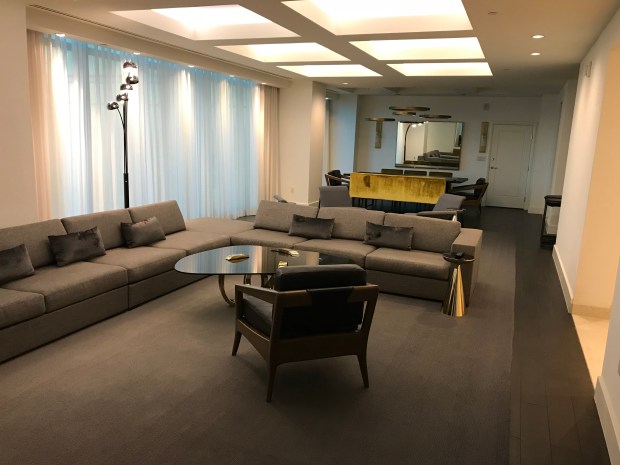
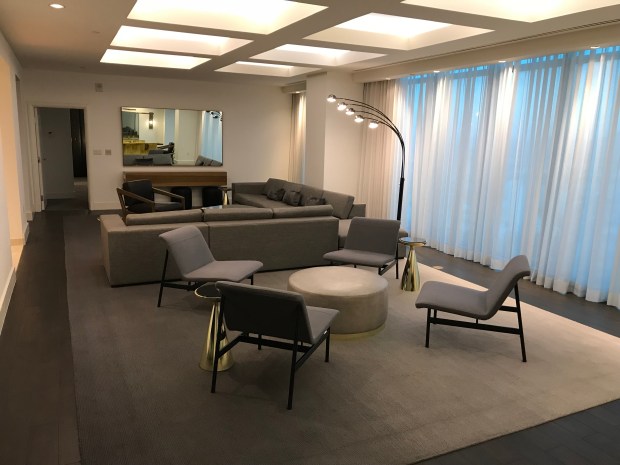
The room opens onto a marble foyer with a half bathroom, which leads into the main room of the suite. “Room” is probably misleading, since it’s more like an expansive cavern. There’s a giant L-shaped couch, a second sitting area, a wet bar, and a huge conference/dining table with room for 15 people. There are giant mirrors on each end of the room, and it took me an embarrassingly long time to realize that these mirrors were also TVs.

IMG_3010
Marble foyer/entryway with living room in the background
IMG_3008
Walk into the living room and turn right, and this is what you see.
IMG_3011
The impressive dining room/conference table.
IMG_3012
Turn around, and the room looks like this. (Not pictured: wet bar.)
IMG_3009
There’s also a separate little office room opposite the living room (next to the foyer).

Of course, the entire length of the room features floor-to-ceiling windows, and the view is stunning with all the curtains opened. This room faced the very end of the strip as well as part of Las Vegas airport. While I didn’t see any normal air traffic, I was excited to get a good view of the private terminal that sends the government’s “Janet” planes to Area 51.

IMG_3019
It’s hard to see due to the extreme zoom, but that plane on the runway is one of the Janet 737-600s that flies around the ultra-restricted airspace in the Nevada desert.

Just this part of the room is bigger than our entire apartment at home, and the cost to stay here every night for a month would actually be less than a two-bedroom apartment in San Francisco. I got pretty sick the last day of our trip, and it was pretty nice just bumming around our giant room in a bathrobe and binge-watching Catfish on multiple TVs.

Speaking of TVs, there are five in total – two mirror TVs in the main room, two normal TVs in the bedroom, and one mirror TV in the bathroom. Not bad, right? As for the bedroom, on its own, it was bigger than a lot of hotel rooms and consisted of a sitting area and a bed separated by a partition.

IMG_3007
Bedroom sitting area.
IMG_3006
Bedroom bed area.

Of course, the bathroom was something to behold as well. In addition to the usual stuff (his and her sinks, marble shower, etc), there’s a jetted tub that’s open to the rest of the room, and in a first for me, a separate sitting area. The toilet is in a separate room that also includes a bidet (also a first), and the cherry on top is that the shower doubles as a steam room (complete with a bench seat). It’s nuts.

IMG_3003
Looking at the hot tub and shower from the sitting area in the bedroom.
IMG_3004
Half of the sitting area (there’s a bench at the other end too).
IMG_3005
Hot tub and decorative piece of wood.

So yeah, this room was ridiculous and amazing, and while we didn’t need anywhere close to this amount of space, it was pretty damn fun to have it.

Other stuff: we used our free breakfast credit both days, and the room service food was pretty good. Justine had eggs benny and said they were okay (she’s an eggs benny connoisseur though), and I had the housemade granola (yum), the quinoa cereal (not yum), and the lemon custard cakes (which are really just pancakes with some candied lemon rind sprinkled on them, in case you, like me, didn’t know what custard cakes actually were). After fees and tips, our breakfast came to around $80 each morning, so we did end up exceeding the $60 per day FHR stipend, although not by much.

The Delano is a non-gaming hotel, which is nice if you want a break from the casino scene (or if you just don’t want to have to walk through a cloud of cigarette smoke, slot machine noise, and desperation on your way from your room to the street). It’s only a minute or two walk to the Mandalay Bay, though, so you don’t feel disconnected from Vegas’s signature “charms” either. We used our $100 credit at one of the Mandalay Bay restaurants – I know some hotels restrict which restaurants qualify for the credit, although we were told that any restaurant within the Mandalay complex would count.

Overall, we got a fantastic value out of the FHR benefits – $120 for breakfast, $100 on food, plus the upgrade to a room that was almost 3x the cost of the room I actually booked. Also, since the mandatory resort fee covers wifi, you get a $5 per day credit in lieu of FHR’s normal free premium wifi benefit. Since you don’t have a choice in any case, it’s basically $5/day of free money. Unfortunately, the wifi at this hotel sucks really bad, and it constantly goes in and out. It’s decently fast when it works, but you can’t stream anything without the signal cutting out every few minutes.

Bottom line, I’d stay here again in a second. Even without the upgrade, I liked the hotel a lot. Good breakfast, stylish lobby and common areas, friendly service, etc. For variety’s sake, I want to try some other hotels, but after having stayed at the Bellagio, Venetian, and MGM, I’d say this was easily my favorite. (I also stayed at the Imperial Palace around 15 years ago, and I wouldn’t recommend it. In fact, I wouldn’t recommend it so hard that I would even avoid the Linq, which is what the Imperial Palace blossomed into. Also, there’s an urban legend that the owner of the Imperial Palace had a huge collection of Nazi memorabilia somewhere in the hotel, but I don’t know if it was actually true or not.)